
- HOME
- Column・Blog
- Overseas Internet
- Singapore eSIM Guide (2026): Best Plans, Tourist SIM Cards & Free Wi-Fi
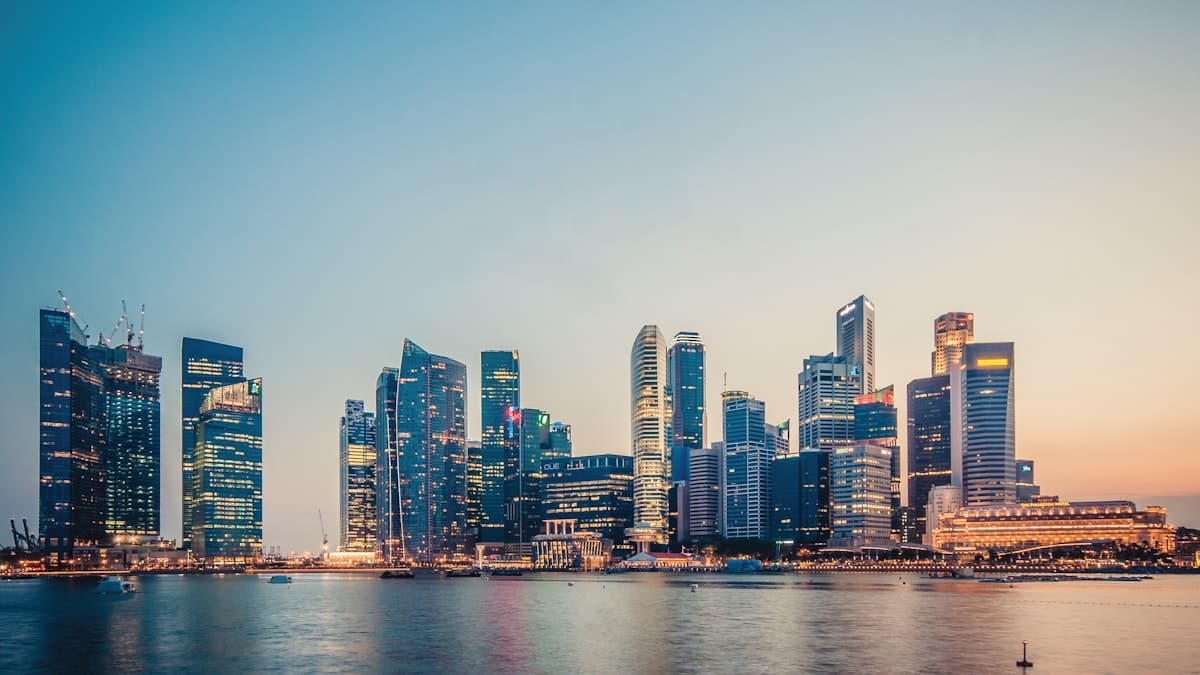
Singapore eSIM Guide (2026): Best Plans, Tourist SIM Cards & Free Wi-Fi
Get trifa and enjoy internet connectivity wherever you go
Only 3 minutes for setup!Get trifa App for FREE!

CHAT BOT
Ask for inquiries about use
Singapore is one of the easiest countries in Asia to get online in — and one of the few where free public Wi-Fi is good enough that some travelers try to get through a whole trip on it. Whether that works depends on what you actually do with your phone between the airport and the hotel. This guide compares every realistic way to stay connected: travel eSIMs, the tourist SIM plans sold by Singtel, StarHub and M1, Pocket Wi-Fi rental, and roaming on your home carrier — with current prices taken from official sources and converted to USD. It also covers the one rule most English-language Singapore guides skip: prepaid SIMs registered against a passport expire after 30 days, which matters if you're staying longer than a holiday. By the end you'll know which option fits your trip, what free Wi-Fi genuinely covers, and what to set up before you fly.
Table of Contents
How Mobile Internet Works in Singapore
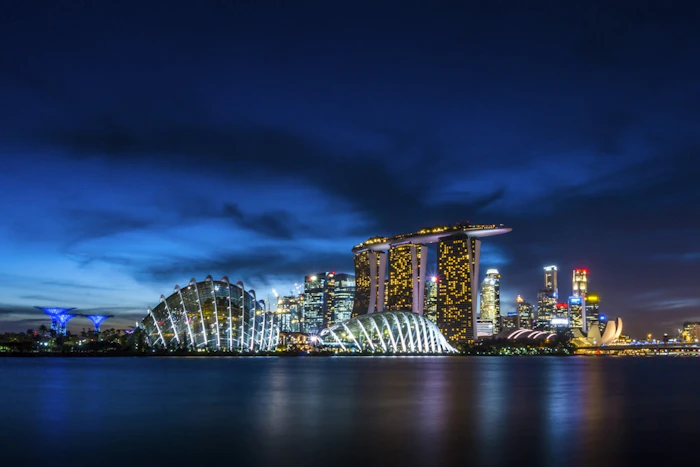
Singapore is one of the easiest places in Asia to get online. There is no coverage problem to plan around, no censorship workaround to arrange, and no language barrier at the SIM counter. What travelers actually have to decide is narrower: which of four connection methods to buy, and whether the country's much-publicized free Wi-Fi does enough of the job to matter.
This guide answers both questions with current, sourced prices — including one rule that catches visitors off guard and that most English-language eSIM guides skip entirely.
Three carriers sit behind almost every plan you'll see
Singtel, StarHub and M1 each operate their own mobile network and each sells a dedicated tourist plan on it. Travel eSIM providers do not build networks; they resell capacity on these same carriers. Airalo's Singapore eSIM, for example, runs on Singtel as its primary network, as does Holafly's. [Source: Airalo official / Holafly official, accessed 2026-08]
That matters for one practical reason: when a comparison article tells you a particular eSIM brand has "better coverage" in Singapore, be skeptical. Most of them are riding the same radio towers. The real differences are price structure, plan length, whether you get a local phone number, and how painful activation is.
Coverage is not the variable here
Singapore is a compact city-state. There is no meaningful city-versus-countryside coverage gap of the kind you plan around in Thailand, Vietnam or Indonesia — the island is small enough that the same network reaches Changi, the CBD, Sentosa and the northern housing estates. Singtel, StarHub and M1 all sell 5G tourist plans as standard rather than as a premium upgrade. [Source: Singtel / StarHub / M1 official, accessed 2026-08]
The upshot: pick your plan on price and convenience, not on coverage maps. Underground stretches of the MRT and the interiors of older malls are the only places where signal reliably drops, and that affects every network equally.
What you actually need data for
Singapore runs on apps to a degree that catches some visitors out. The most common uses for mobile data on a short trip:
- Grab — the dominant ride-hailing and food delivery app. Street-hailing a taxi still works, but Grab is how most people move around outside the MRT.
- Google Maps — live MRT and bus routing in Singapore is accurate down to arrival times.
- SG Arrival Card — a mandatory immigration submission you make before you land (see the pre-departure checklist below).
- QR menus and payment — hawker centres and cafés increasingly expect you to scan.
- Messaging — WhatsApp, Telegram, iMessage and the rest work normally.
None of these are heavy on data. A short trip rarely needs more than 3–5 GB unless you stream video or tether a laptop.
eSIM vs. Tourist SIM vs. Pocket Wi-Fi vs. Roaming
Four options, and for most travelers the choice resolves in under a minute. The table below compares them on the things that actually decide it.
The comparison at a glance
Option | Typical cost, 5-day trip | Setup effort | Devices covered | Singapore phone number? |
|---|---|---|---|---|
Travel eSIM | About $3–$25 USD | Install at home before you fly; live on landing | 1 (can tether if the plan allows it) | No — data only |
Carrier tourist SIM (physical) | S$12–S$30 (about $9–$23 USD) | Buy on arrival with your passport; swap the card | 1 | Yes, with calls and SMS |
Pocket Wi-Fi rental | Varies by rental provider | Collect and return a device | Several | No |
Home carrier roaming | $60 USD (Verizon TravelPass, 5 days at $12/day), or included on some plans | None — it just switches on | 1 | No — you keep your home number |
Costs are converted from official carrier pricing at approximately 1 SGD = 0.78 USD, mid-August 2026. Rates move; treat the USD column as a guide and the SGD column as the number you'll actually be charged.
Choose by trip length and group size
A few clean rules cover almost every case.
- Two to seven days, traveling alone or as a couple: a travel eSIM. It is the cheapest option at the low end, it is working before you clear immigration, and there is no counter to find at 1 a.m. after a long-haul flight.
- You need a Singapore phone number: a physical carrier SIM. Restaurant reservations, some delivery services and occasional SMS verification want a local number, and every tourist eSIM sold by the local carriers is data-only. This is the one thing an eSIM genuinely cannot do for you.
- Two weeks or longer: read the passport rule below before you commit to a carrier SIM. Its 30-day expiry is a real constraint on longer stays.
- Family or group where several people need data: in most countries this is where Pocket Wi-Fi wins on cost. Singapore is the exception. Carrier tourist SIMs here start at S$12 (about $9 USD) for a month of service with hundreds of gigabytes, so buying everyone their own line is already cheap, and eSIM plans start lower still. A rental router adds a device to charge, a deposit to leave, a counter to visit twice, and the constraint that the group has to stay together to stay online. If you're already carrying a phone that supports eSIM, there is little left for Pocket Wi-Fi to solve in Singapore specifically.
What roaming actually costs
If you are only in Singapore for 48 hours as part of a longer trip, your existing plan may be the least effort. Check the specifics before you assume it's free.
Carrier | What you get |
|---|---|
Verizon (US) — TravelPass | Singapore appears on Verizon's published TravelPass destination list at $12 per line per day. That includes 5 GB of high-speed data before speeds drop to 3G for the rest of the session, and you are billed only on the days you actually use the phone abroad. |
T-Mobile (US) | Singapore is included on plan, with the allowance set by tier: 15 GB high-speed on Experience Beyond and Go5G Next, 5 GB on Experience More, Go5G Plus, MAX and ONE Plus, then 256 kbps. Older Go5G, Magenta and ONE plans get 256 kbps only. Texting is unlimited; calls are $0.50 per minute. |
Telstra (AU) — International Day Pass | Singapore sits in Zone 2 at A$10 per day, including 2 GB of data per day plus unlimited standard calls and SMS. |
Optus (AU) | Sells daily roaming passes covering Singapore. The price and daily data depend on which plan you're on — check your plan's roaming page, as the older and newer tiers differ significantly. |
UK carriers | Singapore is outside the European roaming zones that UK plans usually include, so expect a separate daily add-on rather than inclusive roaming. Confirm the rate with your provider before departure. |
[Source: Verizon / T-Mobile / Telstra official pages, accessed 2026-08]
The arithmetic is straightforward. Verizon TravelPass over a five-day Singapore trip is $60, at $12 a day. A local tourist SIM covering the same five days costs about $9, and a travel eSIM can cost less than that. Roaming earns its price on a one-night stopover, or when you genuinely cannot afford to be unreachable on your usual number — not on a week's holiday.
Choosing a Singapore eSIM: What to Compare Before You Buy
Every eSIM sold for Singapore delivers data over Singtel, StarHub or M1. What differs is how the plan is packaged. Broadly there are two families: international travel eSIM brands, and eSIM versions of the local carriers' own tourist plans.
Travel eSIM providers
These are bought online, installed before you leave home, and activate when they detect a Singapore network. They are data-only across the board — no Singapore phone number, no SMS.
Provider | Plan structure for Singapore | Price (USD, checked 2026-08) |
|---|---|---|
Ubigi | Fixed-data plans, entry tier 1 GB / 7 days | From $3 |
Holafly | Unlimited data by duration, 3 to 30 days, on the Singtel network | $11.90 (3 days) / $27.50 (7 days) / $73.90 (30 days) |
Airalo | Singapore eSIM on the Singtel network | Priced in your local store currency — check on the day |
Saily, Nomad | Fixed-data plans from roughly 1 GB upward | Check current pricing on the provider's site |
Trifa | Eight data tiers from 1 GB to unlimited, durations from 1 to 60 days | Check current plans in the app |
[Source: Ubigi official / Holafly official / Airalo official, accessed 2026-08]
Two notes on reading a table like this honestly. First, prices for the same eSIM often display in different currencies depending on where you open the store, so a headline "from $X" figure can differ from what you're actually charged. Verify on the checkout page. Second, "unlimited" in the travel eSIM market usually means a generous daily allowance followed by throttling rather than genuinely uncapped speed — read the fair-use terms if you plan to tether.
The local carriers also sell eSIMs — and they're data-only too
Singtel, StarHub and M1 each offer their tourist plan as an eSIM. The important catch is that the eSIM versions strip out the voice component. StarHub states plainly that its tourist eSIMs are data-only, and its eSIMs must be activated within 18 days of purchase. M1's S$13 eSIM plan (250 GB, 30 days) is likewise data-only. [Source: StarHub official / M1 official, accessed 2026-08]
So the decision is cleaner than it looks: if you want a Singapore phone number, you want a physical SIM, from any of the three. If you only want data, an eSIM — local or international — is simpler and usually cheaper.
Five things to check before you pay
- Does your phone support eSIM? iPhone XR / XS and later, Samsung Galaxy S20 and later, and Google Pixel 3a and later generally do. iPhones bought in mainland China, Hong Kong or Macau are the notable exception and do not support eSIM.
- Is your phone carrier-unlocked? Handsets bought on contract, particularly in the US, are sometimes locked to the seller's network. Confirm with your carrier before you buy anything.
- When does the clock start? Some plans count validity from the moment you buy; others from first connection in the destination. If you're installing a week early, this is the difference between a working plan and a dead one.
- Is tethering allowed? Not every plan permits it, and it's the fastest way to burn a small data allowance. Check before you plan to work from a laptop.
- Do you need a phone number? Data-only is fine for maps, Grab and messaging apps. It is not fine if a service will SMS you a verification code to a local number.
Buying a Tourist SIM Card in Singapore (and the Passport Rule)
This is the section most English-language Singapore eSIM guides leave out, and it is the one with real consequences for anyone staying more than a month.
Where to buy, and whether the airport costs more
SIM cards are sold at all four Changi terminals. Changi Airport lists Changi Recommends counters, Cheers and 7-Eleven convenience stores, and money changers across Terminals 1 through 4, plus StarHub counters in Terminals 1, 2 and 3. In the city, the same convenience store chains and the carriers' own shops stock them. [Source: Changi Airport official, accessed 2026-08]
A widely repeated claim online is that airport SIMs cost S$30–S$40 more than the same product bought in town. That does not hold up. Changi's own listing gives airport price ranges of S$12–S$50 for Singtel, S$12–S$50 for StarHub and S$12–S$30 for M1 — the same S$12 entry price the carriers publish on their own websites. [Source: Changi Airport / StarHub / M1 official, accessed 2026-08]
What the airport does cost you is time. Buying at a counter after a long flight means queuing, handing over your passport, and waiting for registration. Installing an eSIM at home the night before costs nothing extra and skips all of that.
The passport rule and the 30-day clock
Singapore regulates prepaid SIM registration. You cannot buy an anonymous prepaid SIM: an original passport must be presented and registered at the point of sale. Changi Airport states outright that you are required to show your passport or another form of identification to buy one.
The part that surprises people comes next. Under rules that took effect on 15 July 2024, a SIM registered against a passport is valid for only 30 days from the date of registration. Singtel's tourist plan terms put it in plain language: after thirty days, a passport-registered plan "will be suspended without prior notice or liability to you, and there shall be no refund." To keep the line beyond that, you have to re-register with a Singapore-issued Identity Card or work pass — documents a visitor does not have. M1 states the same 30-day limit and the same NRIC/FIN requirement. [Source: Singtel hi!Tourist terms and conditions / M1 official, accessed 2026-08]
Practical consequences:
- For a trip of two or three weeks, this rule never bites. Buy the SIM and forget about it.
- For a stay of a month or more — a long research trip, a stopover-and-return itinerary, a work assignment — a passport-registered SIM will die partway through, and topping it up will not revive it.
- If you are coming back to Singapore later in the same trip, do not assume the SIM you bought on the first leg will still work. Check the registration date against your return date.
Note that carriers describe this rule in terms of the lines they issue themselves. Whether it applies in the same way to a travel eSIM issued by a provider outside Singapore is not something the published rules spell out, so treat any confident claim either way with caution.
What S$12 to S$30 actually buys
Tourist plans in Singapore are unusually generous on data, to the point where the headline allowances stop being meaningful. Current published plans:
Carrier | Plan | Price (SGD / approx. USD) | Local data | Validity |
|---|---|---|---|---|
Singtel | hi!Tourist S$10 | S$10 / about $8 | 500 GB 5G+ (also usable in Malaysia, Indonesia, Thailand, Hong Kong) | 7 days |
Singtel | hi!Tourist S$15 | S$15 / about $12 | 500 GB 5G+, plus 18 GB APAC and 8 GB worldwide roaming | 30 days |
Singtel | hi!Tourist S$30 | S$30 / about $23 | 1,000 GB 5G+ enhanced, plus 100 GB Asia and 18 GB worldwide roaming | 30 days |
StarHub | 4G Tourist | S$12 / about $9 | 300 GB, plus regional roaming allowances | 30 days |
StarHub | 5G Tourist Core | S$15 / about $12 | 300 GB 5G, plus 30 GB APAC roaming | 30 days |
StarHub | 5G Tourist Plus | S$30 / about $23 | 400 GB 5G, plus 95 GB APAC roaming | 30 days |
M1 | Tourist SIM S$12 | S$12 / about $9 | 100 GB 5G, with 500 minutes of local calls and 100 SMS | 15 days |
M1 | Data-only eSIM S$13 | S$13 / about $10 | 250 GB 5G, no calls or SMS | 30 days |
M1 | Tourist SIM S$14 | S$14 / about $11 | 500 GB 5G, with unlimited incoming and 500 minutes outgoing | 30 days |
[Source: Singtel / StarHub / M1 official pages, accessed 2026-08. USD figures converted at approximately 1 SGD = 0.78 USD, mid-August 2026.]
Two things to take from this table. First, the data allowances are effectively decorative — nobody uses 300 GB on a week's holiday, so choosing a plan by gigabytes is choosing on the wrong axis. Choose on price, validity, and whether you need a voice line. Second, Singtel's hi!Tourist plan is restricted to foreign passport holders only, which tells you exactly who it's priced for. [Source: Singtel official, accessed 2026-08]
Free Wi-Fi in Singapore: Wireless@SG and #WiFi@Changi
Singapore's public Wi-Fi is genuinely good by international standards, and it is the reason a small number of travelers get through a short trip without buying anything. It is still not a substitute for a data plan, for reasons worth being specific about.
#WiFi@Changi — the easiest free Wi-Fi you'll use all trip
Changi Airport runs its own network under the SSID #WiFi@Changi. It requires no registration, no payment and no personal information: you select the network, open a browser, and connect from the landing page. It covers all terminals, in both public and transit areas. [Source: Changi Airport official, accessed 2026-08]
This is the network to use for the fifteen minutes between landing and sorting out your actual connection — checking a booking, messaging whoever is meeting you, or activating a travel eSIM you installed at home but haven't switched on yet.
Wireless@SG — and whether a foreign number can register
Wireless@SG is the nationwide public Wi-Fi programme overseen by Singapore's Infocomm Media Development Authority (IMDA) and operated by the telcos. You'll find it in shopping malls, MRT stations, public libraries, hawker centres, community centres and parks.
The question that matters to a visitor is whether you can register without a Singapore phone number. According to StarHub, one of the programme's operators: "For foreign visitors and non-supported devices, log in to Wireless@SG easily with your mobile number, via any web browser." The flow is to select your mobile operator, enter your number, and key in the one-time PIN sent by SMS. StarHub gives the service a minimum speed of 5 Mbps onwards per user. [Source: StarHub official, accessed 2026-08]
Two honest caveats. First, that description comes from an operator's page rather than from IMDA's own published rules, which were not retrievable when this article was checked — so treat it as the operator's stated position rather than a guarantee. Second, receiving an SMS one-time PIN on a foreign number while abroad may incur international messaging charges from your home carrier, and if you have already disabled roaming to avoid bill shock, you may not receive the PIN at all. That combination is exactly why free Wi-Fi is a poor primary plan.
Where else you'll find free Wi-Fi
- Hotels — essentially universal in Singapore, from hostels to the Marina Bay properties. Speeds dip in the evening when the whole floor is streaming.
- Malls — most large shopping centres run their own guest network in addition to Wireless@SG.
- Cafés — Starbucks and the local chains offer it, usually with a time limit per session.
- MRT stations — available at major stations, though not reliably on moving trains.
- Hawker centres and libraries — covered where Wireless@SG has been deployed.
Why free Wi-Fi isn't a plan
Three specific failure modes, all of which happen on ordinary trips:
- You need data precisely when you're moving. Booking a Grab, following walking directions, checking whether the next bus is four minutes or fourteen — none of that happens sitting in a café with the password.
- Registration can fail when you need it. A captive portal that wants an SMS code you can't receive is worse than no Wi-Fi at all, because you'll spend ten minutes discovering that.
- Open networks are not private. Public hotspots frequently carry unencrypted traffic, and rogue access points impersonating legitimate networks are a documented risk at airports and cafés worldwide. Doing banking or entering card details on one is a bad habit anywhere.
Free Wi-Fi in Singapore is a useful backup and a fine way to save data at the hotel. Plan on it as your only connection and you will spend part of your trip standing still, looking for signal.
Before You Fly: Setup Checklist
Everything here is faster to do at home on your own Wi-Fi than at an airport gate. Fifteen minutes of preparation removes essentially every connectivity problem travelers actually hit in Singapore.
Install and test your eSIM before departure
Buy and install the eSIM profile while you're still on home Wi-Fi. Most travel eSIMs install at any time but only start counting validity when they first connect to a network in the destination — though not all of them, so confirm your provider's rule before installing early.
After installing, check that the new line appears in your phone's mobile data settings, even though it won't be active yet. Discovering that the profile failed to install is a two-minute fix at home and a genuinely stressful problem in an arrivals hall.
Turn off roaming on your home line
If you're using a travel eSIM or a local SIM, disable data roaming on your home carrier's line so it can't quietly connect and bill you.
- iPhone: Settings → Cellular → select your home line → Cellular Data Options → turn Data Roaming off.
- Android: Settings → Network & internet → SIMs → select your home SIM → turn Roaming off.
Note the inverse for your travel eSIM: most travel eSIMs technically operate as roaming services, so data roaming must be switched on for that line specifically. Turning roaming off globally is the single most common reason a correctly installed eSIM appears not to work.
Submit the SG Arrival Card
Singapore requires all travelers to submit an SG Arrival Card before arrival, with exceptions for those transiting without seeking immigration clearance and for residents entering via land checkpoints. It can be submitted within three days of arrival, counting the day of arrival itself, and it is free of charge through the official ICA e-Service or the MyICA mobile app. [Source: Immigration & Checkpoints Authority official, accessed 2026-08]
Two warnings. Commercial sites charge a fee to submit this on your behalf; the ICA explicitly states it does not endorse them. And because the submission window opens only three days before arrival, this is a task you'll do from a hotel or an airport lounge mid-journey — one more reason to have working data before you land, not after.
Download offline maps and apps
- Download the Singapore area in Google Maps for offline use. The island fits in a small download and covers you if anything goes wrong.
- Install Grab before you fly and register the account while you still have a working phone number for verification. Setting it up on arrival with a data-only eSIM is harder than it needs to be.
- Confirm your phone is carrier-unlocked if you plan to buy a physical SIM.
Why Trifa Works for a Singapore Trip
Trifa is an international eSIM app covering 200 countries and regions, Singapore included. It fits the Singapore use case for a few concrete reasons.
Plan tiers that match a short trip
Singapore trips are frequently short — a two-night stopover on the way somewhere else, or a long weekend. Trifa sells eight data tiers (1, 3, 5, 10, 20, 30 and 80 GB, plus unlimited) with durations from 1 to 60 days, so you can buy a plan sized for two days rather than rounding up to a week. Current plans and pricing are shown in the app.
Setup takes minutes, and happens before you fly
Purchase through to a working data connection typically takes around three minutes. On iOS 17.4 and later, installation is a single tap with no QR code involved. Supported devices include iPhone XR / XS and later — excluding handsets purchased in mainland China, Hong Kong or Macau — along with Samsung Galaxy S20 and later and Google Pixel 3a and later. Tethering is available depending on the plan, which is worth checking in the app if you intend to work from a laptop.
Support runs around the clock — in Japanese
Trifa's in-app chat support is available 24 hours a day, 365 days a year. The team is staffed by Japanese-speaking agents, so English-only travelers may want to use translation tools when reaching out. Response times are fast, and the team can usually resolve an activation problem or reissue an eSIM quickly, but it's worth knowing the language situation before you're relying on it at 2 a.m.
A few extras that matter on a family trip
- Family accounts: one account holder can add up to seven family members and manage their plans and data from a single app — useful when you're the one person in the group who understands eSIMs.
- Cancellation guarantee: an optional add-on that refunds the plan cost in full if you cancel before the eSIM is activated, for any reason. A protection fee applies. Relevant if your itinerary is not yet locked in.
- Travel insurance: optional cover underwritten by Tokio Marine & Nichido, arranged inside the same app, for trips from one day to three months.
Frequently Asked Questions
Which SIM is best for tourists in Singapore?
If you only need data, a travel eSIM is the simplest option — it's installed before you fly and works the moment you land. If you need a Singapore phone number for calls, SMS or reservations, buy a physical tourist SIM from Singtel, StarHub or M1; entry plans start at S$10–S$12 (about $8–$9 USD) and are sold at all four Changi terminals as well as in the city. The carriers' own eSIM versions are data-only, so they don't solve the phone-number problem.
Can I buy an eSIM at Changi Airport?
You don't need to. An eSIM is a digital profile, so you can buy and install one from home before departure and have it live the moment you land. That's the main advantage over a physical SIM. If you'd rather sort it out on arrival, the carrier counters and convenience stores at Changi sell both physical SIMs and carrier eSIMs, and #WiFi@Changi gives you free Wi-Fi to complete an online purchase in the terminal.
Do I need a passport to buy a SIM card in Singapore?
Yes. Prepaid SIM registration is regulated, and you must present your original passport at the point of sale. Beyond that, note that under rules effective 15 July 2024, a SIM registered against a passport is valid for only 30 days and is then suspended without notice — extending it requires a Singapore-issued identity card or work pass, which visitors don't have.
Do Singapore eSIMs support 5G?
The local carriers all sell 5G tourist plans as standard rather than as a paid upgrade — StarHub's 5G Tourist Core and Plus, M1's tourist plans, and Singtel's hi!Tourist plans all advertise 5G. Travel eSIM providers ride on the same networks, but whether a given plan is provisioned for 5G varies by provider and tier, so check the plan description rather than assuming.
Can I make calls with a Singapore eSIM?
Not with a local number. Every tourist eSIM sold in Singapore — by the local carriers and by international travel eSIM brands alike — is data-only. You can still make calls over data through WhatsApp, FaceTime, Telegram or similar, and you can keep your home SIM active in the phone to receive calls on your usual number. If you specifically need a Singapore number that can send and receive ordinary calls and SMS, you need a physical SIM.
Is free Wi-Fi enough for a short trip to Singapore?
Only if you're prepared to be offline while moving. #WiFi@Changi at the airport needs no registration and is genuinely convenient, and Wireless@SG covers malls, MRT stations, libraries and hawker centres. But you'll be without data in taxis, on foot between sights and on most of the MRT — exactly when you're navigating. Given that a local plan starts under $10 USD for the trip, free Wi-Fi is best treated as a backup.
Do social media and messaging apps work normally in Singapore?
Yes. WhatsApp, Instagram, Facebook, X, YouTube, Telegram and iMessage all work as they do at home, and you don't need a VPN for ordinary travel use. Singapore does block specific individual websites under its online falsehoods and foreign interference laws — Freedom House's 2025 country report documents ten sites blocked in October 2024, among others — but that is targeted blocking of particular domains, not the platform-level restrictions you'd plan around in mainland China. [Source: Freedom House, Freedom on the Net 2025, accessed 2026-08]
Singapore rewards a small amount of preparation. Install an eSIM before you fly or budget S$12 for a tourist SIM on arrival, submit the SG Arrival Card in the three-day window, and check whether your trip runs past the 30-day passport-registration limit. Do those three things and connectivity stops being something you have to think about for the rest of the trip.
Get trifa and enjoy internet connectivity wherever you go
Only 3 minutes for setup!Get trifa App for FREE!
CHAT BOT
Ask for inquiries about use



Writer
trifa Editorial Team (Travel Prep & Local Info)
We provide easy-to-understand guides for beginners on travel preparation and local information, including the best season to visit, what to pack, and what to be aware of while traveling abroad. When needed, we interview Trifa’s local staff and organize the content based on on-the-ground conditions. We also verify time-sensitive information—such as seasons, regulations, and business hours—using primary sources from public agencies, transportation operators, and official facilities, and we update articles when changes occur (the “Last updated” date is shown in each article).
Search by Category
Popular Articles
POPULAR ARTICLES
01
 Overseas Internet
eSIM is recommended for international travel! Here are 7 advantages in a nutshell.
2024.01.07
02
%2520(1).jpg&w=3840&q=75) Overseas Internet
Overseas InternetWhat are the 6 ways to use a Japanese smartphone/cell phone overseas?
2024.02.06
03
%2520(1).jpg&w=3840&q=75) Overseas Travel Essentials
Overseas Travel EssentialsAre you ready for a trip to Korea? Checklist of things to bring and essentials
2024.02.07
Get trifa and enjoy internet connectivity wherever you go
Only 3 minutes for setup!Get trifa App for FREE!
CHAT BOT
Ask for inquiries about use