
- HOME
- Column・Blog
- Overseas Internet
- Taiwan SIM Card Guide (2026): Where to Buy, Prices, and the Two-ID Rule
Taiwan SIM Card Guide (2026): Where to Buy, Prices, and the Two-ID Rule
Get trifa and enjoy internet connectivity wherever you go
Only 3 minutes for setup!Get trifa App for FREE!

CHAT BOT
Ask for inquiries about use
Taiwan is one of the easiest countries in Asia to get online in. All three national carriers sell unlimited-data prepaid cards aimed at tourists, they staff counters in the arrival halls at Taoyuan Airport, and three days of unlimited 5G costs NT$500, roughly US$16. There is one rule that catches visitors out. Taiwan runs a real-name registration system for mobile numbers, and the carriers ask foreign travelers for two identity documents, not one. Most English-language advice compresses that into "bring your passport," which is not what Chunghwa Telecom, Taiwan Mobile and Far EasTone publish on their own pages. This guide covers where the counters are and when they open, the published price of every tourist pass at all three carriers, exactly which documents count as your second ID, whether your US, UK or Australian handset needs unlocking before you fly, and when a travel eSIM is the better call. It also says plainly where the sourcing runs out, including the convenience store claim we could not confirm and the reports that airport counters ask for a passport alone.
Table of Contents
Taiwan SIM Cards at a Glance: What Tourists Need to Know
Taiwan is one of the easiest countries in Asia to get connected in. The three national carriers all run tourist prepaid cards with unlimited data, they all staff counters in the arrival halls at Taoyuan Airport, and the entry-level pass costs about the same as a decent lunch in Taipei.
There is one rule that catches people out, and it is the reason this guide exists: Taiwan runs a real-name registration system, and the carriers ask foreign visitors for two identity documents, not one. Almost everything written about Taiwan SIM cards in English glosses over this with "bring your passport." That is not what the carriers actually publish.
Here is the whole thing in one table.
Question | Short answer |
|---|---|
Where do I buy one on arrival? | At a carrier counter in the airport. Chunghwa Telecom lists eight airport service centers, including Taoyuan Terminal 1 and Terminal 2 (arrival and departure), Taipei Songshan, Taichung and Kaohsiung. Taiwan Mobile staffs desks in both Taoyuan arrival halls and at Kaohsiung. |
What ID do I need? | Your passport plus a second document. A visa or entry permit, a Taiwanese or home-country driver's license, a boarding pass and a visa-exemption entry stamp are all on the carriers' accepted lists. |
What does it cost? | NT$500 (about US$16) for 3 days of unlimited 5G, NT$800 (about US$25) for 7 days, NT$1,600 (about US$50) for 30 days. 4G passes start at NT$300 (about US$9). |
Is the data really unlimited? | Yes, on the day passes. Taiwan Mobile states its unlimited passes have no throttling; Chunghwa Telecom bundles free CHT Wi-Fi hotspot access on top of mobile data. |
Do I need an unlocked phone? | Yes, for a physical SIM. UK handsets sold since December 2021 cannot legally be locked. US handsets usually need to be paid off, and in some cases 40 to 60 days of service. |
How do I pay? | Chunghwa Telecom takes New Taiwan Dollar cash only. Taiwan Mobile takes cash, credit cards, China UnionPay and Alipay. |
Can I skip the counter entirely? | Yes, with a travel eSIM installed before you fly. You give up the local phone number, and you should check whether the provider handles Taiwan's real-name step for you. |
[Source: Chunghwa Telecom official, Taiwan Mobile official and Far EasTone official pages, accessed 2026-08. Currency conversions at NT$32.1 = US$1, NT$43.3 = GBP 1 and NT$22.7 = A$1, market rates of 14 August 2026.]
The rest of this guide answers each of those in full: where the counters are, what every plan actually costs, exactly which documents count as your second ID, whether your phone will work, and when a travel eSIM is the better call.
Where to Buy a Taiwan SIM Card: Airport, City Stores, or Online
There are four realistic ways to end up with a Taiwanese SIM in your phone. Only two of them are reliable.
At the airport, on arrival
This is what most visitors do, and it is the right default. The counters are inside the terminal, the staff handle the registration paperwork for you, and the card is working before you reach the MRT.
Chunghwa Telecom publishes the widest airport footprint. Its own list of airport service centers covers eight locations [Source: Chunghwa Telecom official, accessed 2026-08]:
Airport | Chunghwa Telecom counters |
|---|---|
Taoyuan International (TPE), Terminal 1 | Arrival Hall (1F), Departure Hall (1F), and a counter inside the restricted area |
Taoyuan International (TPE), Terminal 2 | Arrival Hall (1F), Departure Hall (3F) |
Taipei Songshan (TSA) | 1F |
Taichung International (RMQ) | 1F |
Kaohsiung International (KHH) | 1F |
Taiwan Mobile publishes five counter maps: Taoyuan Terminal 1 Arrival Hall (1F), Taoyuan Terminal 1 Arrival Passport Check Hall, Taoyuan Terminal 2 Arrival Hall (1F), Taoyuan Terminal 2 Arrival Passport Check Hall, and the Arrival Building (1F) at Kaohsiung International Airport [Source: Taiwan Mobile official, accessed 2026-08].
The passport check hall desks are worth knowing about. They sit before immigration, which means you can buy and register a SIM while you are still queueing, rather than after you clear the border.
On opening hours, be careful with anything you read that quotes a single time for "the Taoyuan counter." There is no single time. Taiwan Mobile's posted hours across its airport desks run from 04:30 at the earliest to 23:00 at the latest, and the desk with the shortest day closes at 17:30 [Source: Taiwan Mobile official, accessed 2026-08]. The carrier identifies individual desks only by map pins, so we are not going to assign specific hours to specific counters and pretend to a precision the source does not have.
What this means in practice: if you land in the middle of the night, at least one Taoyuan desk opens at 04:30, but you should not assume every counter you walk past will be staffed. If you land after 23:00, plan on nothing being open.
One more note for the record: neither carrier lists a counter at a Taoyuan "Terminal 3." If you see a guide quoting Terminal 3 hours, treat it with suspicion.
At a carrier store in the city
All three carriers run retail stores throughout Taipei, Taichung, Tainan and Kaohsiung, and they sell the same prepaid products as the airport. This is the fallback if you arrive on a late flight, or if you decided partway through the trip that hotel Wi-Fi is not going to cut it.
Two practical differences from the airport. First, city store staff deal with foreign tourists less often than airport staff do, so the two-document check can take longer. Second, the airport counters exist specifically to serve arriving travelers, which is why they open at 04:30 and city stores do not.
Taiwan Mobile also offers an online reservation that you collect at one of its physical stores, which is a reasonable middle ground if you want the product locked in before you land but do not want to queue at the airport [Source: Taiwan Mobile official, accessed 2026-08].
Ordering online before you fly
You can buy a Taiwan SIM before departure, and there are two different things being sold under that heading.
The first is a carrier's own online reservation, which you then collect in person. Note that Chunghwa Telecom's online reservation system was temporarily closed when we checked, with the page directing buyers to its service centers at TPE, TSA, RMQ and KHH instead [Source: Chunghwa Telecom official, accessed 2026-08]. If you were planning to pre-book with Chunghwa specifically, check whether that has reopened before you rely on it.
The second is a voucher from a travel marketplace or an online retailer. You pay in advance in your own currency, receive a booking reference, and exchange it for a physical SIM at a designated airport counter. This works, and it removes the payment friction of a cash-only counter. What it does not remove is the identity check: you still show your documents when you collect the card.
We could not read the current prices on the major marketplace listings directly, so this guide does not quote them. Compare any voucher price against the carrier prices in the next section before you buy, because the marketplace markup is the whole reason the voucher exists.
Convenience stores: don't build your plan around this
Taiwan has one of the densest convenience store networks in the world, and English-language guides frequently tell you that 7-Eleven and FamilyMart sell prepaid SIMs.
We could not confirm that. English travel and eSIM-brand sites contradict each other directly: some state that convenience stores sell prepaid SIM cards, others state that they only handle top-ups and that the SIM itself has to come from a carrier store, the airport or online. Neither 7-Eleven Taiwan nor FamilyMart Taiwan publishes an English product page for prepaid SIMs that would settle it.
So we are not going to tell you either way. What we will say is that a real-name registration has to be completed by someone trained to do it, and a convenience store clerk at 2am is not a reliable place to bet your connectivity on. Treat convenience stores as a place to top up a card you already have, not as your arrival plan.
Taiwan SIM Card Prices and Plans by Carrier
This is the section that most English guides skip, usually by quoting a vague range like "NT$300 to NT$1,000." Here are the actual published prices, taken from each carrier's own pages.
5G day passes: Chunghwa Telecom and Taiwan Mobile
Chunghwa Telecom and Taiwan Mobile publish identical prices at every duration for their 5G tourist day passes. That is not an approximation. Three days is NT$500 at both, thirty days is NT$1,600 at both, and every step in between matches [Source: Chunghwa Telecom official and Taiwan Mobile official, accessed 2026-08].
Pass | Price (NT$) | Approx. USD | Data | Voice credit included | Hotspot / tethering allowance |
|---|---|---|---|---|---|
3 days (72 hours) | NT$500 | US$16 | Unlimited | NT$50 | 3GB |
5 days (120 hours) | NT$600 | US$19 | Unlimited | NT$100 | 5GB |
7 days (168 hours) | NT$800 | US$25 | Unlimited | NT$150 | 7GB |
10 days (240 hours) | NT$1,000 | US$31 | Unlimited | NT$200 | 10GB |
15 days (360 hours) | NT$1,200 | US$37 | Unlimited | NT$200 | 15GB |
30 days (720 hours) | NT$1,600 | US$50 | Unlimited | NT$200 | 30GB |
For UK and Australian readers, the 7-day pass at NT$800 works out to roughly GBP 18 or A$35, and the 30-day pass at NT$1,600 to roughly GBP 37 or A$70, at the mid-August 2026 rates noted earlier.
Three things about these passes are worth reading carefully.
The clock starts at activation and cannot be paused. Taiwan Mobile states that validity is counted in 24-hour blocks from activation and cannot be extended, so a 5-day card means 120 consecutive hours. Chunghwa Telecom expresses the same thing in hours: 72 hours for a 3-day pass, 720 hours for a 30-day pass. If your flight lands at 22:00 and you activate at the counter, you have effectively bought a day less than you think.
Unlimited means the handset, not necessarily the hotspot. Taiwan Mobile's 5G passes include a capped hotspot-sharing allowance. Once you have shared the free GB with other devices, hotspot sharing stops, but the unlimited data on the phone itself is unaffected. If you are planning to run a laptop and a partner's phone off your connection all week, the hotspot number in the last column is your real constraint, not the word "unlimited."
Voice credit is a bonus, not the point. Every pass includes a small NT$ balance for calls. It is genuinely useful for ringing a restaurant or a guesthouse, but the amounts are modest and any unused balance disappears when the card expires.
The cheaper 4G day passes
If you do not need 5G, the same carriers sell 4G passes at roughly half the price, with the same unlimited data.
Pass | Chunghwa Telecom | Taiwan Mobile |
|---|---|---|
3 days | NT$300 (NT$100 voice credit) | NT$300 (NT$100 airtime) |
5 days | NT$300 (NT$50 voice credit) | NT$300 (NT$50 airtime), plus a NT$500 version with NT$300 airtime |
7 days | NT$500 (NT$150 voice credit) | Not published in the range we checked |
10 days | NT$500 (NT$100 voice credit) | Not published in the range we checked |
15 days | NT$700 (NT$100 voice credit) | Not published in the range we checked |
30 days | NT$1,000 (NT$430 voice credit) | Not published in the range we checked |
[Source: Chunghwa Telecom official and Taiwan Mobile official, accessed 2026-08. Taiwan Mobile's 4G line-up also includes 6-day (NT$400) and 8-day (NT$450) passes; we did not open every product card on that page, so the Taiwan Mobile column is a partial list rather than a complete one.]
The Chunghwa 4G 10-day pass at NT$500 is the standout on price. Half the cost of the 5G equivalent, and 4G in Taiwan is perfectly adequate for maps, messaging, ride-hailing and streaming.
Far EasTone's prepaid packs
Far EasTone, the third national carrier, structures its prepaid range differently, mixing unlimited day passes with capped volume packs [Source: Far EasTone official, accessed 2026-08].
Pack | Network | Price (NT$) | Data | Free airtime |
|---|---|---|---|---|
300 Volume Pack | 4G | NT$300 | 1.2GB within 60 days | NT$100 |
1.8 Value Pack | 4G | NT$300 | 3 days unlimited | NT$300 |
3 Daypass Pack | 4G | NT$300 | 3 days unlimited | NT$100 |
5 Daypass Pack | 4G | NT$500 | 5 days unlimited | NT$200 |
30 Daypass Pack | 5G | NT$999 | 30 days unlimited | NT$100 |
60GB Volume Pack | 5G | NT$999 | 60GB within 60 days, then 10 Mbps | NT$100 |
The 30 Daypass Pack at NT$999 is the cheapest month of unlimited 5G published by any of the three carriers, NT$600 less than the equivalent Chunghwa or Taiwan Mobile pass. If you are staying a month and you can find a Far EasTone counter, that is real money. The catch is footprint: Far EasTone does not publish the same airport counter list that Chunghwa Telecom does, so you may not be able to buy one the moment you land.
How much data do you actually need?
Honestly, for a normal trip to Taiwan, this is not a question you have to answer.
Every mainstream tourist pass from Chunghwa Telecom and Taiwan Mobile is unlimited, and the two cheapest Far EasTone packs are unlimited too. Data sizing is a problem you solve when you are buying a capped travel eSIM, not when you are buying a Taiwanese day pass at an airport counter.
The three numbers that do matter are different ones:
- Duration. Buy for the number of nights you are staying, rounded up, and remember the clock runs in real hours from activation.
- Hotspot allowance, if you are sharing with a laptop or a travel companion. This is the capped part.
- Whether you want 5G at all. If not, the 4G passes cost roughly half.
The Japanese-language version of this article carried per-app data estimates and a claim about throttling after 1GB. We could not source either, and the throttling claim does not hold as a general rule across Taiwanese carriers, so both have been left out here.
Taiwan's Real-Name Registration Rule: The Two IDs You Must Show
This is the part worth reading twice, because it is the single most common way a Taiwan SIM purchase goes wrong, and because the English-language internet has it half right at best.
What the carriers officially require
Taiwan operates a real-name registration system for mobile numbers. Far EasTone states the reason plainly on its English prepaid page: "According to government regulations, dual certificates are required to apply for Prepaid SIM" [Source: Far EasTone official, accessed 2026-08].
Taiwan Mobile publishes the requirement in the clearest form of the three. For foreign travelers it asks for two original documents [Source: Taiwan Mobile official, accessed 2026-08]:
- Primary ID (original): foreign passport (excluding Mainland China, Hong Kong and Macau), or a valid ARC (Alien Resident Certificate) or Entry/Exit Permit for travelers from Mainland China, Hong Kong or Macau.
- Secondary ID (original): valid ARC, a driver's license issued in Taiwan, a National Health Insurance card, a visa, or another identity document such as an Entry/Exit Permit.
Chunghwa Telecom publishes a clause specifically for "foreign nationals, including tourists," asking for a passport or valid ARC as the primary document and, as the secondary document, an entry permit issued by Taiwan's immigration authority, a visa held in Taiwan, an ARC, an international student card, or an official photo ID issued by the applicant's own country such as a social security card, a national identity card or a driver's license [Source: Chunghwa Telecom official, accessed 2026-08].
So the rule is genuinely two documents, at all three carriers, and it is not a policy any one of them invented.
What actually counts as your second ID
Here is where the "bring your passport and hope" advice falls down, and where most visitors turn out to be fine anyway.
Chunghwa Telecom's identity verification rules list eight acceptable second documents for a foreign national opening a new prepaid card. Translated from the original, they are: an ARC, a National Health Insurance card, a visa or entry permit, a driver's license, a visa-exemption entry stamp, a certificate for short-term trainees, a boarding pass, and other valid government-issued documents. The page adds a specific note: when a foreign national applies for a short-validity prepaid card, the second document may be an official document issued by the applicant's own country, as long as it carries a photo, a name and a date of birth that can be checked against the first document [Source: Chunghwa Telecom official, accessed 2026-08].
Read that list again with a tourist's pockets in mind. A visa-exemption entry stamp is in your passport. A boarding pass is in your phone or your hand. A home-country driver's license is in your wallet. Most visitors from the US, UK, Canada and Australia are already carrying two or three qualifying documents without having planned for it.
The practical advice, then, is simple and cheap to follow: carry your driver's license alongside your passport. It costs you nothing, it is on the accepted list, and it removes the entire question.
What we could not confirm: the "passport only at the airport" reports
Several English travel sites state that in practice the counters at Taoyuan Airport ask only for a passport, and that the second document is no longer collected there. Some travelers report exactly that experience.
We could not verify it, and we are not going to repeat it as a rule.
What we checked, and what we found:
- Taiwan Mobile's identity requirement sits inside the same "How to apply" block that covers all three of its channels, listed in this order: 1. apply at the airport counter, 2. online reservation for pickup at a store, 3. apply at a store. The page states no separate, lighter requirement for the airport counter.
- Chunghwa Telecom's foreign-national clause is written at the product level, not per location, and its identity verification rules page likewise makes no airport exception.
- Far EasTone attributes the requirement to government regulation rather than to its own store policy, which is not the shape of a rule a counter would waive locally.
- None of the sites reporting the relaxed airport practice cites a carrier or a regulator.
Our read, stated as an inference rather than a fact: the reports are probably describing the same rule from the other side. If the counter accepts the visa-exemption stamp already in your passport, or glances at the boarding pass in your hand, a traveler experiences that as "they only wanted my passport" even though two documents were technically checked. That would explain both the official pages and the traveler reports without either being wrong. We cannot prove it, so treat it as a plausible explanation and not as permission to arrive with one document.
Bottom line: two documents is what the carriers publish; bring two. Anyone telling you a passport alone is guaranteed to work is telling you something no carrier or regulator has stated.
Age rules
The carriers do not agree here, and we are not going to paper over it.
Chunghwa Telecom treats 18 as the adult threshold: an applicant aged 18 or over applies on their own with two documents, while an applicant aged 7 to 17 must be accompanied by a legal representative who presents their own two original documents and signs a consent form. Far EasTone's English page still says "the admission of your guardian is required if under age of 20" [Source: Chunghwa Telecom official and Far EasTone official, accessed 2026-08]. Taiwan Mobile's tourist page states no age requirement at all.
If you are travelling with a teenager who wants their own number, assume a parent needs to be at the counter with their own documents, and pick the carrier after you have read its current page.
Will Your Phone Work? Unlocking and Compatibility for US, UK and Australian Travelers
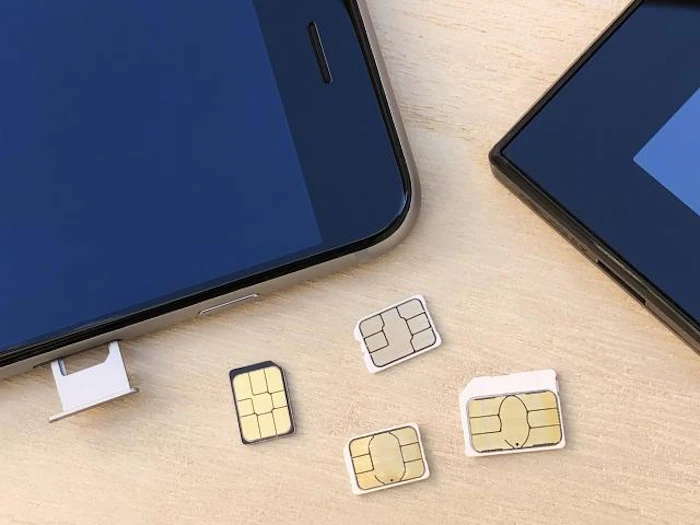
A Taiwanese SIM is useless in a handset that is locked to your carrier at home. This is worth checking weeks before you fly, not at the airport counter, because most unlock processes are not instant.
United States
US carriers lock aggressively, and each has different conditions.
Carrier | Unlock conditions |
|---|---|
Verizon | Postpay devices unlock automatically when bought at full retail price, or when the device financing balance is paid in full. Prepaid devices stay locked until 365 days of paid, active service are completed. Policy effective 18 February 2026. |
T-Mobile | The device must have been active on the T-Mobile network for at least 40 days on the requesting line, and any T-Mobile financing or lease must be paid off. Eligible devices that support remote unlock are unlocked automatically within two business days. |
AT&T | Purchased more than 60 days ago, paid for in full with a zero installment balance, not reported lost or stolen, and the account must not be past due. AT&T PREPAID devices need at least 6 months of active service. |
[Source: Verizon official, T-Mobile official and AT&T official support pages, accessed 2026-08.]
The pattern is the same across all three: if you still owe money on the handset, it is probably locked. Pay it off or check your eligibility before you book.
United Kingdom
UK travelers have the easiest time of it. Ofcom rules banning the sale of locked handsets to consumers came into force on 17 December 2021, under General Condition C1.9 [Source: Ofcom official, accessed 2026-08]. Any phone you bought from a UK network after that date is unlocked by law.
If your handset predates December 2021, or you bought it second-hand from someone who did, check with the network before you travel. The ban was not retrospective.
Australia
Telstra does not lock devices sold on month-to-month plans. Prepaid handsets can still be locked, with unlock fees of A$80 for a device never activated or active for six months or less, and A$25 for a device active between six months and two years. Optus prepaid devices can also be locked, and are unlocked through an online request using the handset's IMEI [Source: Telstra official and Optus official, accessed 2026-08].
In short: if you bought your phone outright or on a plan, you are almost certainly fine. If it came bundled with a prepaid starter kit, check.
SIM size and the eSIM alternative
Physical SIMs come in standard, micro and nano sizes. Almost every handset sold in the last decade takes a nano SIM, and Taiwanese carrier counters stock cards that pop out to whichever size you need. Practically speaking, this is no longer something to worry about.
What is worth knowing is that both of the big carriers now offer their tourist product as an eSIM as well as a physical card. Taiwan Mobile states that its traveler's card supports both [Source: Taiwan Mobile official, accessed 2026-08]. If your phone supports eSIM, that removes the fiddly bit at the counter and the risk of losing your home SIM, while keeping the local number.
An eSIM does need a compatible handset. On iPhone that means XR, XS or newer; on Android, recent Galaxy, Pixel, Xperia and AQUOS models. Models bought in Mainland China, Hong Kong and Macau are often eSIM-disabled regardless of the model name.
What You Give Up When You Swap SIMs: Your Home Number, 2FA, and Lost-SIM Risk
Pulling out your home SIM and dropping in a Taiwanese one is the cheapest way to get connected. It is also the way to lose access to your own bank account for a week if you do not think it through.
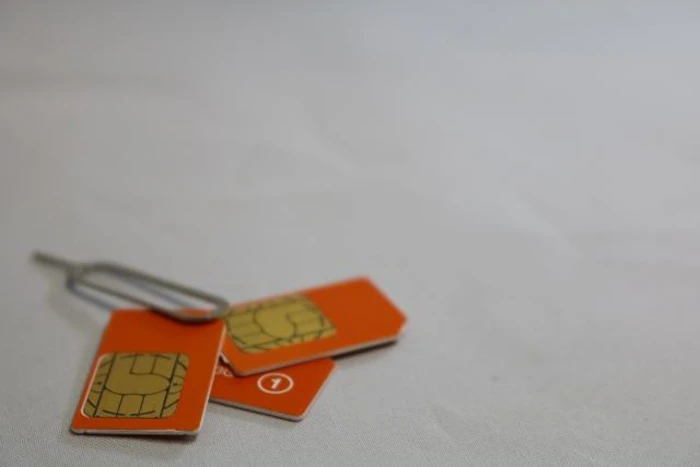
When your home SIM is out of the phone, you stop receiving calls and SMS on your home number. That sounds obvious until you list what actually depends on it:
- SMS one-time passcodes. Banks, brokerages, airline apps and government services still send them. If your bank texts a code to verify a card payment abroad, and the text goes to a SIM sitting in your hotel safe, you cannot pay.
- Fraud alerts. Foreign transactions are exactly what triggers a card issuer's fraud check. A missed verification text can freeze the card you were relying on.
- Airline notifications. Gate changes, delays and rebooking links frequently go by SMS to the number on the booking.
- Family and work reaching you. Anyone who has only your home number will get a ringing phone that you never see.
There are three ways to deal with this, in order of how much we would recommend them.
Move your two-factor authentication off SMS before you fly. Switch the accounts that matter to an authenticator app such as Google Authenticator or Authy, which generates codes on the device with no network involvement. Do this a week ahead, not the night before, because some banks impose a cooling-off period on security changes.
Run dual SIM. If your handset supports two SIMs, or a physical SIM plus an eSIM, keep your home SIM active for calls and SMS with data roaming switched off, and use the Taiwanese SIM or a travel eSIM for data. You keep receiving codes on your home number and you pay nothing for roaming data. This is the single most effective fix, and it is the strongest argument for choosing an eSIM over a physical Taiwanese SIM.
Tell people how to reach you. Share a messaging app your contacts already use, and give your family and workplace an alternative before you leave.
There is also the mundane risk: your home SIM is a fingernail-sized piece of plastic that now lives loose in your luggage for the duration of the trip. Lose it and you are looking at a replacement fee and a trip to a store when you get home, and in some cases a temporary loss of the number itself. If you swap, put the home SIM in the little plastic holder the Taiwanese card came in and keep it somewhere you will not forget it. An eSIM sidesteps this entirely, because nothing physical leaves the phone.
Taiwan SIM Card vs eSIM: Which Should You Actually Buy?
This is not a question with one right answer, and anyone who tells you it is has something to sell. The honest version is that the two options optimise for different things.
What you care about | Local physical SIM | Travel eSIM |
|---|---|---|
Local phone number | Yes. You get a Taiwanese number plus voice credit, which is genuinely useful for restaurant bookings, guesthouses and ride-hailing. | Usually not. Most travel eSIMs, Trifa's included, are data-only with no number. |
Set up before you arrive | No. You buy and register on arrival. | Yes. Install at home, activate on landing. |
Queue on arrival | Yes, and it can be long after a bank of flights lands. | None. |
Real-name registration paperwork | You do it at the counter with two documents. | Depends on the provider. Some handle Taiwan's verification step in-app; others leave it to you. Check before you buy. |
Device requirement | Any unlocked handset. | An eSIM-capable handset. |
Risk of losing a SIM | Your home SIM is out of the phone for the whole trip. | None. Nothing physical is removed. |
Keeping your home number live | Only if you have a second SIM slot. | Easy. Home SIM stays in, eSIM carries the data. |
Price | NT$300 to NT$1,600 depending on speed and duration, paid in cash or by card at the counter. | Varies by provider and plan. |
Multiple devices | Hotspot allowance is capped on the 5G passes. | Depends on the plan; check whether tethering is included. |
A rough decision rule:
- Choose the local physical SIM if you want a Taiwanese phone number, if you are staying long enough that the 30-day pass economics matter, or if your phone does not support eSIM.
- Choose a travel eSIM if you want to land connected, if you need your home number to keep receiving codes and calls, or if the thought of a 40-minute counter queue after a red-eye is unappealing.
On international roaming from your home carrier, the short version is that day-pass roaming from US, UK and Australian carriers is convenient and expensive relative to both options above. It is worth considering only for a very short trip where NT$500 of hassle avoidance is worth more to you than the money.
Using a Trifa eSIM in Taiwan
We publish this guide, so treat this section as what it is: our own product, described with the same sourcing discipline as everything above.
Trifa is a travel eSIM app covering 200 countries and territories. Buying, installing and starting to use a plan happens entirely inside the app, in as little as three minutes.
Three things are specifically relevant to Taiwan.
Trifa's Taiwan eSIM connects to Chunghwa Telecom's network. That is the same carrier that runs the widest airport counter footprint in the country, and the same network you would be buying if you queued at the Terminal 1 arrival hall.
Taiwan's real-name verification is completed in the app. This is the step that trips up travelers using eSIM providers that do not handle it: Taiwan requires the identity registration described earlier whether you buy at a counter or install remotely. Trifa's app captures the passport photograph and completes the verification without a counter visit. It is the one piece of the counter experience you genuinely cannot skip, and it is worth confirming that any eSIM provider you are considering handles it for Taiwan.
Trifa is data-only. Plans do not come with a phone number, and there is no voice or SMS service. If a Taiwanese number matters to you, the local physical SIM in section three is the better product, and we would rather say so than pretend otherwise.
On support: in-app chat is staffed 24 hours a day, 365 days a year. The support team is staffed by Japanese-speaking agents, so English-only travelers may want to use a translation tool when they get in touch, but response times are fast and the chat sits inside the app rather than behind an email queue.
The iOS app is rated 4.6 out of 5 on Japan's App Store (rating as of April 2026). Current Taiwan plan pricing changes with promotions, so check the plans in the app rather than trusting a number in an article.
Frequently Asked Questions
Can foreigners buy SIM cards in Taiwan?
Yes. All three national carriers sell prepaid tourist cards to foreign visitors, and Chunghwa Telecom publishes a dedicated clause for "foreign nationals, including tourists." You need to present two identity documents: your passport as the primary document, plus one of the accepted secondary documents such as a visa, an entry permit or stamp, a boarding pass, or an official photo ID from your own country.
How much does a Taiwan SIM card cost for tourists?
A 3-day unlimited 5G pass is NT$500 (about US$16) at both Chunghwa Telecom and Taiwan Mobile. Seven days is NT$800 (about US$25) and thirty days is NT$1,600 (about US$50). If you do not need 5G, 4G passes start at NT$300 (about US$9) for three days, and Chunghwa Telecom's 4G 10-day pass is NT$500. Far EasTone's 30-day unlimited 5G pack is NT$999, the cheapest month published by any of the three [Source: carrier official pages, accessed 2026-08].
Can I buy a SIM card at Taoyuan Airport?
Yes, and it is the most straightforward option. Chunghwa Telecom lists counters in Terminal 1 arrival and departure halls plus the restricted area, and in Terminal 2 arrival (1F) and departure (3F). Taiwan Mobile staffs desks in both terminals' arrival halls and in both arrival passport check halls, which sit before immigration. Posted hours across Taiwan Mobile's airport desks run from 04:30 to 23:00 depending on the desk.
Is it more expensive to buy a SIM card at the airport?
The carriers publish one price list for their tourist prepaid products, and the airport counters sell from it. What can cost more is a voucher bought through a travel marketplace, where a markup is built into the convenience. Compare any pre-purchased voucher against the carrier prices in section three before buying.
Can I use my US phone in Taiwan?
Yes, provided the handset is unlocked and supports the local bands, which any recent US model does. The unlocking is the part to check: Verizon unlocks postpay devices once the financing balance is paid in full, T-Mobile requires 40 days of active service plus a paid-off device, and AT&T requires 60 days since purchase plus a zero installment balance. Sort this out before you fly, not at the counter.
Do I have to register my passport to use a SIM in Taiwan?
Yes. Taiwan operates a real-name registration system for mobile numbers, and Far EasTone states on its English site that dual documents are required under government regulations. The counter staff record your details when you buy. This applies to eSIMs bought abroad as well, which is why some travel eSIM providers build the verification step into their apps.
Which Taiwanese carrier has the best coverage?
For a normal itinerary of Taipei, Taichung, Tainan, Kaohsiung and the west-coast rail corridor, all three carriers are fine and you should choose on price and counter availability. Chunghwa Telecom is the incumbent and has the largest airport footprint, which is why it is the default recommendation for arriving visitors. If your plans include the east coast, mountain routes such as Alishan, or the outlying islands, Chunghwa Telecom is the conventional choice, though we have not independently measured coverage in those areas and are not going to claim a ranking we did not test.
My SIM will not connect. What should I check?
Work through these in order. Toggle airplane mode on and off, then restart the phone. Confirm the SIM is seated properly, or that the eSIM profile finished downloading. Check that data roaming is switched on where the provider requires it. Confirm the APN is set, since most cards configure automatically but some need it entered manually. Confirm the handset is actually unlocked, and that the correct line is selected as the data line if you are running dual SIM. If all of that checks out, the most likely remaining cause in Taiwan specifically is that the real-name registration has not completed, in which case the counter that sold you the card is the place to go.
.jpeg&w=3840&q=75)
Get trifa and enjoy internet connectivity wherever you go
Only 3 minutes for setup!Get trifa App for FREE!
CHAT BOT
Ask for inquiries about use



Writer
trifa Editorial Team (Overseas eSIM & Connectivity)
To help reduce connectivity issues during overseas travel, we share easy-to-understand guidance on choosing and setting up overseas eSIMs (iPhone/Android), switching networks while traveling across multiple countries, and whether tethering/hotspot is supported—based on insights gained while providing the eSIM app “trifa” (including common setup stumbling points and support inquiry trends). For information that changes frequently—such as pricing, supported countries, and usage conditions—we check the latest updates on official websites and from operators, and we revise articles when changes occur.
Search by Category
Popular Articles
POPULAR ARTICLES
01
 Overseas Internet
eSIM is recommended for international travel! Here are 7 advantages in a nutshell.
2024.01.07
02
%2520(1).jpg&w=3840&q=75) Overseas Internet
Overseas InternetWhat are the 6 ways to use a Japanese smartphone/cell phone overseas?
2024.02.06
03
%2520(1).jpg&w=3840&q=75) Overseas Travel Essentials
Overseas Travel EssentialsAre you ready for a trip to Korea? Checklist of things to bring and essentials
2024.02.07
Related Articles
RELATED ARTICLES
Get trifa and enjoy internet connectivity wherever you go
Only 3 minutes for setup!Get trifa App for FREE!
CHAT BOT
Ask for inquiries about use