
- HOME
- Column・Blog
- Overseas eSIM
- Best eSIM for Philippines (2026): Plans, Prices, and SIM Registration Rules
Best eSIM for Philippines (2026): Plans, Prices, and SIM Registration Rules
Get trifa and enjoy internet connectivity wherever you go
Only 3 minutes for setup!Get trifa App for FREE!

CHAT BOT
Ask for inquiries about use
Getting online in the Philippines is easy. Choosing how is the part that trips people up, because one of the options comes with a legal requirement that most English-language guides never mention. You have four realistic choices: a travel eSIM bought before you fly, a local prepaid SIM or eSIM from Globe, Smart or DITO, international roaming on your existing plan, or a rented pocket Wi-Fi device. Local SIMs are by far the cheapest per gigabyte, but the Philippines SIM Registration Act requires visitors to hand over a passport, proof of a Philippine address and a return ticket, and it caps a tourist-registered SIM at 30 days. This guide covers what that law actually says and where its limits are still unclear, compares the main travel eSIM providers using prices read from their own sites, lists current local carrier plans, and looks at what changes once you leave Manila and Cebu for Boracay, Palawan or Siargao.
Table of Contents
Do You Need an eSIM in the Philippines?
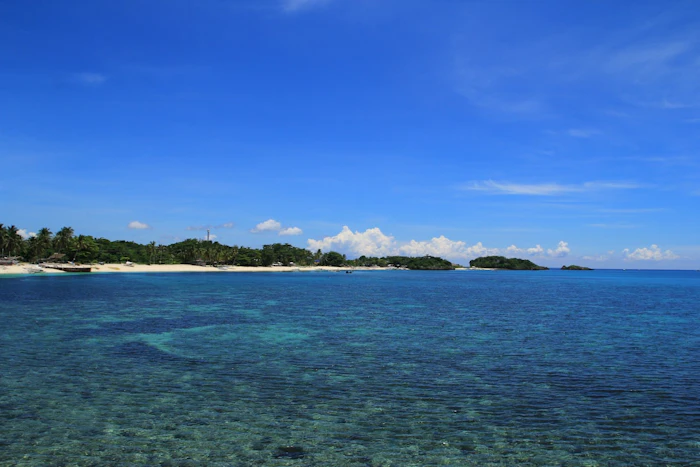
A Philippines trip is rarely a single-city trip. Most itineraries string together a capital, an island, and at least one boat or domestic flight in between, and almost every link in that chain runs through your phone: the ride-hailing app that gets you out of the airport, the messaging thread with the dive shop, the ferry schedule that changed since you booked.
Hotel and cafe Wi-Fi covers a surprising amount of that. What it does not cover is the part of the day when you are moving, which in the Philippines is most of it. So the question is not whether you need data, but which of the four ways of getting it fits the trip you actually booked.
Four ways to get online, and what separates them
Every traveler ends up choosing between the same four options, and they differ less on price than on how much friction they create on arrival day.
- A travel eSIM bought before you fly, from an international provider. You install it at home and it connects when you land.
- A local prepaid SIM or eSIM from Globe, Smart, or DITO, bought at the airport or in a mall once you arrive. Cheapest per gigabyte, but it comes with a registration requirement that catches a lot of visitors off guard.
- International roaming on the plan you already have. Zero setup, highest daily cost.
- Pocket Wi-Fi rented for the trip. Only worth the deposit and the pickup logistics if several people are sharing one connection.
The biggest difference between them is not speed or data allowance. It is that one of the four makes you hand over a passport, a Philippine address, and your return ticket details before your phone will work — the subject of the next section, and for most short trips the deciding factor.
What actually eats data on a Philippines trip
Ride-hailing is the obvious one, and it is worth knowing where it does and does not exist. Grab's own Philippines service-area page lists 23 cities and areas: Bacolod, Baguio, Balanga, Batangas City, Binalonan Pangasinan, Cagayan de Oro, Cebu, Dagupan City Pangasinan, Davao City, Dumaguete City, General Santos City, Iligan City, Iloilo, Koronadal City, Legazpi City, Lipa City, Manila, Naga, Olongapo City, Pampanga, Tacloban City, Tagum City, and Tarlac. Boracay, El Nido, and Siargao are not on that list. [Source: Grab Philippines official service-area page, accessed 2026-08]
That single fact reshapes how you should think about data. In Manila, Cebu, Davao, or Iloilo, your phone is your transport. On the islands, transport is tricycles, habal-habal, and whatever your resort arranges, so your data goes instead into messaging the boat operator, domestic boarding passes, and the group chat coordinating an island-hopping day that has already been rescheduled twice.
The Philippines SIM Registration Act: What It Means for Tourists
Nearly every English-language roundup of Philippines eSIMs skips this, and it is the single most useful thing to understand before you buy anything. The Philippines requires SIM registration by law, the requirement applies to visitors and not just residents, and it carries a hard 30-day cap on tourist-registered SIMs. Here is what the law actually says, followed by an honest account of what we could not confirm.
What the law is
The SIM Registration Act is Republic Act No. 11934. It was signed on October 10, 2022, and under Section 17 it took effect 15 days after publication. Its purpose is to attach a verified identity to every mobile number in the country, mainly to make text scams and fraud traceable. [Source: Republic Act No. 11934, full statute text, accessed 2026-08]
Two details in the statute matter to travelers. First, the Act's definition of "SIM" in Section 3 expressly includes eSIMs, so buying a digital profile from a Philippine operator does not sidestep anything. Second, the Act operates through Public Telecommunications Entities, a term it defines by reference to Republic Act No. 7925, the Philippine law governing telecommunications operators. In plain terms, the obligation is built around the companies licensed to operate networks in the Philippines and the SIMs those companies issue. [Source: Republic Act No. 11934, Sections 3 and 5, accessed 2026-08]
What a tourist has to hand over
Section 5(e)(1) covers foreign nationals visiting as tourists under Section 9(a) of Commonwealth Act No. 613, which is the standard tourist entry category. It requires three things:
- Passport
- Proof of address in the Philippines
- Return ticket to your own country
Smart's official guidance for tourists lists the same three documents and adds the details captured during registration itself: mobile number, full name, nationality, date of birth, and a live selfie. [Source: Smart Communications official blog, accessed 2026-08]
"Proof of address in the Philippines" is the one that trips people up. A hotel booking is normally accepted; if you are staying with a friend or in a private rental, expect to be asked for something more.
The 30-day clock nobody mentions
This is the provision that matters most and appears almost nowhere in English travel coverage. A SIM registered under the tourist rules is valid for only 30 days and is automatically deactivated when that period expires. It can be extended only by presenting an approved visa extension. [Source: Republic Act No. 11934, Section 5(e), accessed 2026-08; corroborated by Smart Communications official blog, accessed 2026-08]
If you are on a two-week beach trip this is irrelevant. If you are a remote worker on a 59-day tourist stay, a language student, or someone doing a long dive season, a local SIM will go dark partway through unless you have also processed a visa extension. Plan for that before you rely on a Philippine number for two-factor codes.
What this means for a travel eSIM bought abroad — and what we could not confirm
Here the honest answer has two halves, and they are worth keeping separate.
What is confirmed. The Act is built around SIMs issued by Philippine-licensed operators. And for one provider we can point at a specific statement: Trifa's official help center says Philippine SIM registration does not apply to its eSIM, on the basis that only SIMs issued by Philippine network operators fall within the rule. [Source: Trifa official help center, accessed 2026-08]
What is not confirmed. We could not retrieve any NTC or DICT issuance that addresses foreign-issued travel eSIMs by name, one way or the other. The regulator's own FAQ document and the implementing rules were not accessible to us on the access date. Plenty of eSIM sellers assert a blanket exemption for roaming profiles, but a seller asserting that its own product is exempt is not a regulator saying so. So we are not going to tell you that every foreign travel eSIM is outside this law. What we can tell you is to check the specific provider's own statement before you buy, and to treat a provider that says nothing about it as an unanswered question.
One nuance makes that advice more than boilerplate. Some international eSIM brands sell what is effectively a local Philippine profile rather than a roaming profile, sometimes under a sub-brand name. If a provider's product is issued through a Philippine network, the registration question is live in a way it is not for a straightforward roaming profile. Ask the provider which of the two you are buying.
There is also a statement that looks like a contradiction and is not. In 2022 the DICT said roaming mobile users are covered by the law. That statement was about Globe, Smart, and DITO SIMs being used overseas by Filipinos abroad, not about foreign SIMs being used inside the Philippines. It is a different situation and does not answer the question above.
The Best eSIMs for the Philippines, Compared
One note on the prices below: we only list a figure where we could read it, in US dollars, on the provider's own website on the access date. Several providers localize prices to the visitor's country and one blocked our request, so those cells are marked rather than filled with a number copied from a comparison site. Promotions also move week to week. Treat every figure here as a checkpoint, not a quote.
Provider | Plan structure | Local network shown on its own page | Hotspot / tethering | Price verified in USD (Aug 2026) |
|---|---|---|---|---|
Trifa | Data-capped and unlimited plans, 1-60 days | Not published | Depends on the plan; shown in the app | Check current plans in the app |
Airalo | Fixed-data and unlimited packages | Smart (as displayed on its Philippines page) | Not stated on the page we accessed | Not verified (prices shown in local currency) |
Holafly | Unlimited data only, 3-30 days | Globe | Yes, capped at 1 GB per day | $11.90 (3 days) to $73.90 (30 days) |
Nomad | Fixed-data and unlimited plans | Globe | Yes | Not verified (prices shown in local currency) |
Jetpac | 30-day plans only on the page we accessed | Not named on the page | Yes, described as unrestricted | $44.99 (30 GB) / $59.99 (40 GB) / $68.50 (unlimited) |
Saily | Fixed-data and unlimited plans | Not verified (site blocked our request) | Not verified | Not verified |
Other names you will run into: Klook, Maya Mobile, Ubigi, and Sim Local all sell Philippines data profiles, and Klook in particular ranks high in Australian search results. None of them changes the decision in the sections below, so they are listed here rather than given their own breakdown.
Holafly — unlimited data, one price, no arithmetic
Holafly sells only unlimited-data plans for the Philippines, priced by duration: $11.90 for 3 days, $20.50 for 5, $27.50 for 7, $36.50 for 10, $50.50 for 15, and $73.90 for 30. It runs on Globe. Hotspot sharing is allowed but capped at 1 GB per day, so it is not a substitute for a group connection. [Source: Holafly official Philippines page, accessed 2026-08]
The appeal is that you never think about gigabytes. The cost of that is the highest entry price of any provider here, which is hard to justify on a short trip where you mostly use Wi-Fi.
Jetpac — the fixed-data option with genuine hotspot freedom
Jetpac's Philippines page showed only 30-day options on the access date: 30 GB for $44.99, 40 GB for $59.99, and an unlimited plan at $68.50 that runs at standard speed for the first 3 GB every 24 hours and up to 1 Mbps after that. Hotspot use is described as unrestricted, which is unusual in this category. [Source: Jetpac official Philippines page, accessed 2026-08]
Several of those prices were promotional when we checked. The absence of a short-stay plan on the page is worth noting if your trip is a week rather than a month.
Airalo — the biggest catalog, and a network worth checking
Airalo is the most widely used name in this category and the one most likely to appear in an AI-generated answer to "best eSIM for the Philippines." Its Philippines page listed Smart as the supported network for the packages shown to us. Elsewhere, Airalo's fixed-data Philippines packages are commonly described as running on Globe under the Alpas Mobile name, so the network you get may depend on which package you pick. [Source: Airalo official Philippines page, accessed 2026-08]
That is worth two minutes of your time before you buy, because as the coverage section below explains, choosing a Philippines eSIM is in practice choosing between Globe and Smart.
Nomad — Globe network, tethering allowed
Nomad's Philippines page names Globe as the network, states that tethering and hotspot use are supported, and notes that unlimited plans throttle to 512 kbps once the daily high-speed allowance is used. Its prices were localized to our region and could not be verified in US dollars, so none are quoted here. [Source: Nomad official Philippines page, accessed 2026-08]
Saily and Trifa
Saily ranks well in US results for Philippines eSIM searches and is a real option, but its site returned an error to every request we made, so we are not going to describe plans or prices we could not read. Check it directly.
Trifa is a Tokyo-based eSIM app covering 200 countries and regions, with data-capped and unlimited plans for the Philippines from one day up to 60. Its prices move with exchange rates and carrier agreements, so current plans are shown in the app rather than quoted here. A dedicated section further down covers where it is genuinely different and where it is not.
Local SIM Cards: Globe, Smart, and DITO — and Where to Buy One
The Philippines has three mobile network operators: Globe, Smart, and DITO. Between them they run every consumer brand you will see on a shop sign, including TM and GOMO under Globe and TNT and Sun under Smart. DITO is the newcomer, having launched commercial service in 2021 after winning the regulator's new-major-player licence. No fourth nationwide operator has established itself since. [Source: negative search on Philippine operator listings, accessed 2026-08]
A local SIM is the cheapest way to buy data in the Philippines by a wide margin. It also involves the registration process described above, so read that section before deciding.
Operator | Position | Visitor-facing offer we could verify | Best suited to |
|---|---|---|---|
Globe | Largest by consumer footprint; widest reach outside cities | Traveler SIM and Prepaid Traveler eSIM (pricing not published in a form we could verify) | Multi-island trips and provincial travel |
Smart | PLDT group; strong in metro areas | Prepaid Philippine Tourist eSIM, PHP 1,599, unlimited data plus unlimited local calls and texts | City-based stays where you also want a local number |
DITO | Third operator, launched 2021; aggressive pricing | Level-Up 99: 7 GB / 30 days for PHP 99. Level-Up 999: 130 GB / 30 days for PHP 999. Data 50: 5 GB / 7 days for PHP 50 | Budget-focused city stays |
Globe — the one to pick if you are leaving the cities
Globe markets a Traveler SIM and a Prepaid Traveler eSIM specifically at visitors, and its network is the one most often cited as holding up in provincial and island areas. We were not able to load Globe's own pricing pages, so we are not going to quote a peso figure that we could not read on Globe's site. Check globe.com.ph or the airport counter for the current package. [Source: Globe official Traveler SIM product page, existence verified 2026-08; pricing not verifiable]
Smart — a tourist eSIM you can buy without a counter visit
Smart's online store sells a Prepaid Philippine Tourist eSIM for PHP 1,599 that includes unlimited open-access data plus unlimited calls and texts to all local networks. You scan the delivered QR code and complete registration at Smart's registration portal. The product page did not state a validity period, so confirm that before buying. [Source: Smart official online store, accessed 2026-08]
Note that unlimited calls and texts to Philippine numbers is a genuine advantage of a local SIM over any travel eSIM, all of which are data-only. If you are booking domestic ferries, calling a resort, or dealing with a bank that insists on SMS codes to a local number, that matters.
DITO — the cheapest data per peso, in a smaller footprint
DITO's published prepaid promos are dramatically cheaper per gigabyte than anything else in this article. Level-Up 99 gives 7 GB for 30 days at PHP 99; Level-Up 199 gives 20 GB for 30 days at PHP 199; Level-Up 299 gives 32 GB for 30 days at PHP 299; and Level-Up 999 gives 130 GB for 30 days at PHP 999. For a short stay, the Data 50 sachet gives 5 GB for 7 days at PHP 50. DITO also markets unlimited 5G promos starting at PHP 299 for 7 days. [Source: DITO official prepaid page, accessed 2026-08]
The trade-off is coverage. DITO built its network later and its footprint is concentrated where the population is. If your itinerary is Manila or Cebu city plus day trips, that is fine. If it includes a remote island, it is a gamble.
Where to buy one, and what actually happens at the counter
There are three realistic places to buy a local SIM.
- Airport arrival areas. Globe and Smart counters in the arrival halls at both Ninoy Aquino International Airport (MNL) and Mactan-Cebu International Airport (CEB) are widely and consistently reported by travel publications. Neither airport publishes counter locations or opening hours on its own website, so we are not going to claim they are open for a 2 a.m. arrival. If you land late, have a backup.
- Operator stores and malls. Every large mall in Manila and Cebu has official Globe, Smart, and DITO stores. Staff handle the registration, you can change plans and top up on the spot, and there is no queue of jet-lagged arrivals behind you.
- Convenience stores. 7-Eleven and similar chains sell prepaid SIMs and load, but you complete the registration yourself through the operator's portal.
Whichever route you take, the inputs are the same: passport, proof of a Philippine address, return ticket, plus your personal details and a live selfie. Have the hotel confirmation and return flight open before you start.
Coverage Beyond Manila: Cebu, Boracay, Palawan, and Siargao
An important thing to be upfront about: we do not have first-party speed measurements for the Philippines, and the independent measurement sources we would normally cite were not accessible on the access date. So there are no throughput numbers in this section. What follows is the structural picture, which is more durable than a speed test anyway.
Choosing an eSIM is choosing a network
This is the part most comparison articles leave out. A travel eSIM does not have its own towers. It rides on Globe, Smart, or DITO, and which one it rides on is determined by the provider you pick. Holafly's Philippines plans run on Globe. Nomad's run on Globe. Airalo's page showed Smart for the packages we saw. [Source: each provider's official Philippines page, accessed 2026-08]
So the practical sequence is backwards from how most people do it. Decide which network suits your itinerary first, then pick a provider that uses it. If your trip is heavily provincial or island-based, that generally argues for a Globe-based product.
Cebu and the other cities
Cebu City and Mactan Island are the easiest part of the country to be connected in: all three operators are present, Grab operates there, and coverage is a non-issue in the city, the resort strip, and along the road to the airport. The same is true of Metro Manila, Davao, Iloilo, Bacolod, and Cagayan de Oro, all of which appear on Grab's service-area list. In these places any option in this article will work, and the choice comes down to price and paperwork rather than signal.
Boracay, Palawan, and Siargao
The island destinations are a different proposition, and the honest framing is that connectivity degrades in a fairly predictable way: strongest in the town center, weaker along the coast, unreliable on the water. Island-hopping boats, the crossing to Boracay, and the road north from Puerto Princesa toward El Nido are all places where people routinely lose signal for stretches.
The practical consequences are worth planning around rather than worrying about:
- Download offline maps before you leave the city. This is the single highest-value five minutes of preparation for a Philippines trip.
- Ride-hailing is not a fallback here. Boracay, El Nido, and Siargao do not appear on Grab's Philippines service-area list, so arrange airport and pier transfers through your accommodation in advance. [Source: Grab Philippines official service-area page, accessed 2026-08]
- Screenshot your bookings. Ferry tickets, resort confirmations, and dive reservations are worth having as images rather than as links you need data to open.
- Favor a Globe-based product if the island portion is the main part of your trip, for the reason described above.
Typhoons and power interruptions
The Philippines sits in an active typhoon belt, and the rainy season brings both storms and the power interruptions that follow them. Cell sites run on backup power for a limited time, so an extended provincial outage can take mobile data down with it regardless of which network or provider you chose. Nothing about your SIM choice changes that; a charged power bank and offline maps do. Treat it as a planning item for wet-season travel, not a reason to buy differently.
eSIM vs Local SIM vs Pocket Wi-Fi vs Roaming: How to Choose
The four options are not competing for the same traveler. Each one clearly wins in a specific situation, and the table below is the fastest way to find yours.
Option | Setup effort | Registration under the SIM law | Local phone number | When it wins |
|---|---|---|---|---|
Travel eSIM | Installed before you fly; connects on landing | Ask the provider; confirmed not required for Trifa | No, data only | Trips of roughly 3-14 days where arrival-day friction matters more than cost per GB |
Local prepaid SIM or eSIM | Counter or portal on arrival; documents required | Yes, and tourist SIMs expire after 30 days | Yes, with local calls and texts | Longer stays, heavy data use, or when you need a Philippine number |
International roaming | None; keep your own number | Not applicable | Yes, your home number | Trips of a few days, or when calls to your home number are non-negotiable |
Pocket Wi-Fi | Pickup, deposit, return, and a device to charge | Handled by the rental company | No | Groups or families sharing one connection who stay together all day |
What roaming actually costs in the Philippines
Roaming is the option people default to and then regret, so it is worth putting real numbers against it. All three of the following were read from the carriers' own sites.
- Verizon TravelPass is listed at $12 per day for the Philippines, with 5 GB of high-speed data per 24-hour session and 3G speeds after that. [Source: Verizon official TravelPass country list and FAQ, accessed 2026-08]
- T-Mobile International Pass offers 1 day with 2 GB for $10, 10 days with 15 GB for $50, and 30 days with 30 GB for $75, across 215+ destinations. [Source: T-Mobile official International Pass page, accessed 2026-08]
- Telstra lists the Philippines as a Zone 2 International Day Pass destination at A$10 per day with 2 GB of data per day. [Source: Telstra official international roaming page, accessed 2026-08]
Run the arithmetic against your actual trip length. A 10-day trip on Verizon TravelPass is $120. T-Mobile's 10-day pass at $50 is the most competitive of the three and is genuinely reasonable if you also want your home number live. Beyond about a week, though, every one of these costs more than an unlimited travel eSIM for the same period, and considerably more than a local SIM.
Where pocket Wi-Fi still makes sense
Pocket Wi-Fi only pays off when the sharing is real. A family of four who stay together all day get one bill instead of four; two travelers on separate itineraries get one device and an argument about who takes it. Add the pickup, the deposit, the return, and another thing to charge, and the case narrows to groups. Most travel eSIMs allow hotspot sharing anyway, which covers much of the same ground without the hardware.
A note on device compatibility
Two things have to be true before any eSIM works. Your phone has to support eSIM, and it has to be carrier-unlocked. The first is straightforward on recent hardware. The second catches out travelers on US carrier financing plans in particular, where a phone can still be locked to the carrier that sold it. Check both before you buy anything, not at the airport.
Why Travelers Choose Trifa for the Philippines
Trifa is a Tokyo-based travel eSIM app covering 200 countries and regions, with data-capped and unlimited plans for the Philippines and durations from one day to 60. Here is where it is genuinely different, and where it is not.
No SIM registration. Trifa's official help center states that the Philippine SIM registration requirement does not apply to its eSIM, because the rule covers SIMs issued by Philippine network operators. In practice, that means no passport photocopy, no proof-of-address question, no return-ticket check, and no queue at an arrivals counter. Given how much of this article is about that requirement, it is the most concrete reason to choose a travel eSIM here. [Source: Trifa official help center, accessed 2026-08]
Ready before you land. Purchase to connection takes as little as three minutes, done on your home Wi-Fi before you fly. You come out of the arrivals hall at MNL or CEB already connected, which matters most on exactly the flights where the counters may not be staffed. [Source: Trifa official site, accessed 2026-08]
One app across the trip. With 200 countries and regions covered, a Manila-plus-Cebu-plus-a-layover itinerary runs on one account rather than three purchases. Family accounts let one person add up to seven additional members and manage everyone's data from a single app. [Source: Trifa official site and company announcements, accessed 2026-08]
Travel insurance in the same app. Trifa sells travel insurance underwritten by Tokio Marine & Nichido that can be bought in-app in as little as a minute, for terms from one day to three months — a practical convenience on island-hopping and diving itineraries. [Source: Trifa company announcement, accessed 2026-08]
Support, described accurately. Trifa's in-app chat support team is available 24 hours a day, 365 days a year. The team is staffed by Japanese-speaking agents, so English-only travelers may want to use translation tools when reaching out, but response time is fast and the team handles the setup and connection issues that actually come up. This is worth knowing before you choose, rather than discovering at 11 p.m. in Boracay.
What it does not do. Like every travel eSIM in this article, Trifa is data-only. There is no Philippine phone number, so calls and texts go through messaging apps. Tethering availability depends on the plan and is shown in the app. And Trifa does not publish which Philippine network its plans connect to, so if choosing between Globe and Smart is central to your decision, that is a question to put to support before buying.
Device requirements. iPhone XR/XS or later, and on Android, Galaxy S20 or later, Pixel 3a or later, and equivalent recent models. The phone must also be carrier-unlocked. [Source: Trifa official device compatibility page, accessed 2026-08]
On the App Store, Trifa holds a 4.6 rating from more than 13,000 reviews. As with any store rating, that reflects the app experience rather than network performance in any one country. [Source: App Store listing, accessed 2026-08]
See Trifa's Philippines eSIM plans and pricing
Frequently Asked Questions
Can tourists use an eSIM in the Philippines?
Yes. Both Philippine operators and international travel eSIM providers sell eSIM products that work for visitors. The difference is paperwork: an eSIM issued by a Philippine operator falls under the SIM Registration Act and requires your passport, a Philippine address, and a return ticket, while several international providers state that the requirement does not apply to their product. Confirm that with your specific provider before you buy.
Do I need to register my SIM as a tourist?
If you buy a SIM or eSIM from a Philippine operator, yes. Republic Act No. 11934 requires it, and the tourist requirements are a passport, proof of address in the Philippines, and a return ticket. There is one detail worth knowing in advance: a SIM registered under the tourist rules is valid for only 30 days and is automatically deactivated after that, extendable only with an approved visa extension. [Source: Republic Act No. 11934, Section 5(e), accessed 2026-08]
Which eSIM is best for the Philippines?
It depends on which network your itinerary needs and how you use data. For unlimited data with no gigabyte arithmetic, Holafly runs on Globe and starts at $11.90 for three days. For fixed data over a longer stay with unrestricted hotspot use, Jetpac's 30-day plans start at $44.99 for 30 GB. If you want to avoid the SIM registration process entirely and travel across several countries on one account, a provider like Trifa that covers 200 countries and regions is the simpler choice. Verify current pricing on the provider's own site, since promotions move constantly.
How much does mobile data cost in the Philippines?
There are three different price levels, and the gap between them is large. Local prepaid data is cheapest: DITO publishes 7 GB for 30 days at PHP 99 and 130 GB for 30 days at PHP 999. Travel eSIMs sit in the middle, with verified examples ranging from $11.90 for three days of unlimited data to $68.50 for 30 days. International roaming is the most expensive, at $12 per day on Verizon TravelPass or A$10 per day on Telstra's Zone 2 Day Pass. [Source: DITO, Holafly, Jetpac, Verizon and Telstra official pages, accessed 2026-08]
Can I buy a SIM or eSIM after I arrive?
Yes. Globe and Smart counters in the arrival halls at Manila (MNL) and Mactan-Cebu (CEB) are consistently reported by travel publications, and every major mall has official operator stores. Two cautions: neither airport publishes counter opening hours, so a late-night arrival is a risk, and you will need your passport, hotel address, and return ticket details on hand for registration. Buying an eSIM before you fly removes both problems.
Which network will my travel eSIM actually use?
Whichever one your provider has an agreement with, and it varies. Holafly and Nomad both name Globe on their Philippines pages. Airalo's page showed Smart for the packages displayed to us. This matters more than most people realize, because outside the major cities the difference between networks is the difference between having signal and not. If your trip is island-heavy, check the network before the price. [Source: each provider's official Philippines page, accessed 2026-08]
Will my eSIM work on Boracay, Palawan, or Siargao?
Generally yes in the town centers, less reliably along the coast, and not on the water. Plan around it rather than against it: download offline maps before you leave the city, screenshot your ferry and resort bookings, and arrange transfers in advance, since Grab does not list Boracay, El Nido, or Siargao among its Philippines service areas. [Source: Grab Philippines official service-area page, accessed 2026-08]
Do I need a phone number in the Philippines, or is data enough?
Data alone covers most travel needs, since messaging apps handle calls and chats. A local number becomes useful in two situations: when a Philippine business or bank sends SMS codes to a domestic number only, and when you need to call a ferry operator or resort that does not answer messaging apps. If either applies, a local SIM is the answer, and Smart's tourist eSIM at PHP 1,599 bundles unlimited local calls and texts with unlimited data. Every travel eSIM in this article is data-only. [Source: Smart official online store, accessed 2026-08]
Get trifa and enjoy internet connectivity wherever you go
Only 3 minutes for setup!Get trifa App for FREE!
CHAT BOT
Ask for inquiries about use



Writer
trifa Editorial Team (Travel Prep & Local Info)
We provide easy-to-understand guides for beginners on travel preparation and local information, including the best season to visit, what to pack, and what to be aware of while traveling abroad. When needed, we interview Trifa’s local staff and organize the content based on on-the-ground conditions. We also verify time-sensitive information—such as seasons, regulations, and business hours—using primary sources from public agencies, transportation operators, and official facilities, and we update articles when changes occur (the “Last updated” date is shown in each article).
Search by Category
Popular Articles
POPULAR ARTICLES
01
 Overseas Internet
eSIM is recommended for international travel! Here are 7 advantages in a nutshell.
2024.01.07
02
%2520(1).jpg&w=3840&q=75) Overseas Internet
Overseas InternetWhat are the 6 ways to use a Japanese smartphone/cell phone overseas?
2024.02.06
03
%2520(1).jpg&w=3840&q=75) Overseas Travel Essentials
Overseas Travel EssentialsAre you ready for a trip to Korea? Checklist of things to bring and essentials
2024.02.07
Get trifa and enjoy internet connectivity wherever you go
Only 3 minutes for setup!Get trifa App for FREE!
CHAT BOT
Ask for inquiries about use