

Best eSIM for Taiwan (2026): 6 Plans Compared With Real Speed Test Data
Get trifa and enjoy internet connectivity wherever you go
Only 3 minutes for setup!Get trifa App for FREE!

CHAT BOT
Ask for inquiries about use
Taiwan is one of the easiest countries in Asia to stay connected in, but picking an eSIM is harder than it should be. Providers quote prices in different currencies, some run on the largest local network and some do not, and the rules around Taiwan's real-name registration are described inconsistently across the web. This guide compares six eSIM options for Taiwan using prices pulled from each provider's own site on the same day, in US dollars. It also includes something the other comparisons do not have: first-party speed measurements taken at 10 locations around Taipei on a Chunghwa Telecom connection, with a median download speed of 245 Mbps. You will find a plan-sizing table, an honest comparison against local SIM cards and your home carrier's roaming pass, and a clear account of which identity documents are actually required and which are not.
Table of Contents
Why Use an eSIM in Taiwan?

Taiwan is one of the easiest places in Asia to stay online. All three national carriers run dense 5G networks across the west coast, and coverage in Taipei is strong enough that data speeds are rarely the thing that slows your trip down.
The question is not whether you will have signal. It is which of the four ways to get it makes sense for you: a travel eSIM bought before you fly, a local prepaid SIM from an airport counter, your home carrier's roaming pass, or hotel and public Wi-Fi. For most short visits, a travel eSIM wins on three specific points.
Your home number keeps working
An eSIM is a data plan downloaded onto a chip already built into your phone. Nothing is swapped, so there is no tiny plastic card to drop on the floor of a taxi and no need to carry your home SIM around loose in your wallet.
That matters more than it sounds. Your home line stays active in the second slot, so two-factor authentication codes, bank verification texts, and calls from your airline still reach you while your data runs over the Taiwanese network. When you land back home, you turn the travel line off and everything reverts.
This is also the reason eSIMs have become the default for US travelers specifically. Every iPhone 14 and later sold in the United States has no SIM tray at all, so a physical Taiwanese SIM is not even an option on those phones. eSIM support itself goes back to the iPhone XR and XS. [Source: Apple official, accessed 2026-08]
You are connected before you clear customs
You buy and install the plan at home, over your own Wi-Fi, days before departure. It sits dormant until it detects a Taiwanese network, then activates on its own.
The practical benefit is the first hour after landing. You walk off the plane already able to call a ride, load your hotel address, and message whoever is waiting for you, instead of joining the line at an airport telecom counter with your passport out.
Short trips usually cost less
Travel eSIM providers have no retail counters and no physical inventory, and that shows up in the pricing on short durations. Three days of unlimited data from a major provider runs about $12.50, and a small data-capped package for a long weekend starts around $4. [Source: Airalo official, accessed 2026-08]
Compare that to a roaming pass from a US carrier at $12 per day, and the math for a five-day trip is not close. The full comparison is in the table further down.
The 6 Best eSIMs for Taiwan, Compared
These six cover the range most travelers actually choose between: two global marketplaces, an unlimited-data specialist, a budget challenger, an app-first provider, and the direct Chunghwa Telecom reseller route. All prices below were taken from each provider's own site on the same day, in US dollars.
Provider | Local network | Cheapest plan (USD) | Unlimited, 3 days (USD) | Hotspot | ID needed at purchase | Support |
|---|---|---|---|---|---|---|
Trifa | Chunghwa Telecom | Check current plans in the app | Check current plans in the app | Varies by plan | Passport photo, in app | 24/7 in-app chat |
Airalo | Taiwan Mobile | $4.00 (1 GB / 3 days) | $12.50 | Yes | None | In-app chat |
Holafly | Not disclosed | $12.50 (unlimited / 3 days) | $12.50 | 1 GB per day | None | 24/7 WhatsApp and live chat |
Saily | All three national carriers | $3.99 | No unlimited plan | Yes | None | In-app support |
Nomad | Chunghwa | From $4 | Not published in USD | Yes | None | In-app support |
Klook (Chunghwa) | Chunghwa Telecom | From $8.59 | Varies by promotion | Yes | Varies by product | Marketplace support |
Prices accessed August 2026 from each provider's official site. All six charge in US dollars, so the amount that lands on an Australian or British card depends on your card's exchange rate on the day you buy.
Trifa — app-first, with real-name verification handled for you
Trifa is a Japanese eSIM app covering 200 countries. In Taiwan it connects to Chunghwa Telecom, the country's largest mobile operator by both subscribers and revenue. [Source: Chunghwa Telecom official, accessed 2026-08]
Its most Taiwan-specific advantage is real-name verification. Because the plan runs on a direct Chunghwa connection rather than an international roaming arrangement, identity verification applies, and Trifa handles it inside the app by photographing your passport. There is no counter to visit and no separate web form to fill in. The company filed a patent application covering this automated verification flow in September 2025. [Source: Trifa press release, accessed 2026-08]
Trifa is also the provider behind the speed measurements in the next section, taken on its own Chunghwa connection. Support is a staffed chat inside the app, available 24 hours a day, 365 days a year. The team is made up of Japanese-speaking agents, so English-only travelers may want to use a translation tool when reaching out, though response times are fast. Setup takes about three minutes from purchase to first connection, and current Taiwan pricing is shown in the app.
Airalo — the widest range of plan sizes
Airalo is the largest travel eSIM marketplace, covering more than 200 destinations with over 30 million users. [Source: Airalo official, accessed 2026-08]
Its Taiwan catalog is the most granular of the six. Data packages run from 1 GB for 3 days at $4.00 up to 50 GB for 30 days at $49.00, with useful middle steps at 5 GB for 7 days ($11.00) and 10 GB for 7 days ($17.50). Unlimited packages start at $12.50 for 3 days and reach $72.50 for 30 days. [Source: Airalo official, accessed 2026-08]
Two things to know. Airalo's Taiwan eSIM runs on Taiwan Mobile, not Chunghwa, which matters if you are heading into the mountains rather than staying on the west coast. And the package list shown to you can differ by region, so confirm the exact plan and price on the checkout screen before paying.
Holafly — unlimited data with a hotspot cap
Holafly sells only unlimited plans for Taiwan: $12.50 for 3 days, $20.50 for 5, $27.50 for 7, $36.50 for 10, $50.50 for 15, and $73.90 for 30. [Source: Holafly official, accessed 2026-08]
The pricing is competitive at the short end and gets expensive past two weeks. The catch worth flagging is tethering: Holafly permits hotspot sharing but caps it at 1 GB per day. If your plan is to power a laptop or a travel partner's phone off your connection all day, that cap will bite before the "unlimited" label helps you. [Source: Holafly official, accessed 2026-08]
Support is 24/7 through WhatsApp or live chat. Holafly does not name the Taiwanese network it uses on its Taiwan page, so treat coverage claims for rural areas as unconfirmed.
Saily — cheapest entry price, no unlimited option
Saily has the lowest starting price of the six at $3.99, and its 10 GB / 30-day plan at $19.99 is the best value in this comparison for a traveler who wants a fortnight of normal use without paying unlimited rates. [Source: Saily official, accessed 2026-08]
It is also the only provider here that states it connects to all three of Taiwan's national carriers — Chunghwa Telecom, Taiwan Mobile, and Far EasTone — which in principle gives it the widest fallback if one network is congested. Hotspot sharing is included on every plan with no daily cap. [Source: Saily official, accessed 2026-08]
The trade-off is that Saily offers no unlimited plan for Taiwan, so heavy video users should look elsewhere.
Nomad — data-capped plans with a soft landing
Nomad's Taiwan eSIM starts at $4 and connects to Chunghwa. [Source: Nomad official, accessed 2026-08]
Its distinguishing feature is what happens when you run out. Rather than cutting you off, Nomad throttles to 512 kbps and resets your high-speed allowance every 24 hours. That is slow for video but perfectly usable for maps, messaging, and calling a taxi — a meaningful safety net on a trip where running dry at 11pm in an unfamiliar district is the actual risk. Tethering is supported. [Source: Nomad official, accessed 2026-08]
One limitation for readers outside the US: Nomad's site prices in your local currency and does not publish a full US dollar plan table, so verify the amount at checkout.
Klook — the direct Chunghwa reseller route
Klook and KKday are Asian travel marketplaces that resell Chunghwa Telecom eSIMs, and Klook's Taiwan eSIM listing starts at $8.59. [Source: Klook official, accessed 2026-08]
Buying through a marketplace gets you a genuine Chunghwa connection at prices that are frequently discounted. The flip side is that those prices move with promotions, so any figure quoted in an article, including this one, is a floor rather than a fixed rate. Some marketplace eSIM products also require identity verification through a separate web form, which removes much of the convenience advantage over a travel eSIM. Read the specific listing before you buy.
What Network Speeds to Expect in Taiwan (Measured at 10 Spots in Taipei)
Most Taiwan eSIM articles describe speed in adjectives. The numbers below are first-party measurements taken on a Trifa eSIM running on Chunghwa Telecom, so you can judge the network against what your trip actually requires.
How the measurements were taken
Item | Detail |
|---|---|
Tool | fast.com (Netflix) |
Device | iPhone, 5G-capable model |
eSIM | Trifa |
Network | Chunghwa Telecom |
Date | March 2026 |
Readings | 10 locations, one reading each |
One important limit on this data: every reading was taken in Taipei. These numbers say nothing about Hualien, Kenting, or the mountain roads around Alishan, and should not be read as a national coverage claim.
The results
Location | Time | Download | Connection | Upload |
|---|---|---|---|---|
Shilin Night Market | 18:12 | 950 Mbps | 5G | 79 Mbps |
Hotel room | 7:28 | 790 Mbps | 5G | 91 Mbps |
MRT, above ground | 18:56 | 370 Mbps | 5G | 24 Mbps |
Taipei 101 basement food court | 13:02 | 280 Mbps | 5G | 0.56 Mbps |
Taipei Main Station, underground | 10:46 | 260 Mbps | LTE | 87 Mbps |
Ximending | 11:47 | 230 Mbps | 5G | Not recorded |
Taipei Main Station, street level | 11:01 | 200 Mbps | 5G | 43 Mbps |
Zhongshan Station, underground | 19:01 | 93 Mbps | 5G | 45 Mbps |
Zhongshan Station, street level | 19:05 | 84 Mbps | 5G | 3.1 Mbps |
MRT, in tunnel | 17:54 | 12 Mbps | 5G | 65 Mbps |
Across those 10 readings the median download was 245 Mbps and the mean was 327 Mbps, with a range of 12 to 950 Mbps. Nine of the 10 came in at 80 Mbps or higher. [Source: Trifa first-party measurement, March 2026]
The median is the more useful figure here. The mean is pulled upward by two exceptional readings — 950 Mbps at Shilin Night Market and 790 Mbps in a hotel room — and a typical spot in Taipei behaves more like the 245 Mbps middle of the distribution. Either number is far more than any travel task needs. Streaming HD video takes about 5 Mbps, and video calls take less.
Where speeds actually drop
Only one location fell below 80 Mbps: a moving MRT train inside a tunnel, at 12 Mbps. That is two disadvantages stacked — underground and handing off between cells while moving — and it is still enough for messaging, maps, and standard-definition video.
Static underground locations held up well. Taipei Main Station's underground level returned 260 Mbps and the Taipei 101 basement food court returned 280 Mbps, both higher than their street-level counterparts on the day. Crowding matters more than being indoors: Zhongshan Station, a busy shopping area measured in the evening, was the slowest of the non-tunnel readings at 84 to 93 Mbps.
In short, there is no need to plan a Taipei itinerary around dead zones.
Hotel Wi-Fi is the weak link, not the cellular network
The clearest single result came from a direct comparison in the same hotel room one minute apart: the eSIM returned 790 Mbps at 7:28, and the hotel's own Wi-Fi returned 32 Mbps at 7:27. [Source: Trifa first-party measurement, March 2026]
Hotel Wi-Fi is shared across every guest in the building, so it degrades exactly when you want it — early morning and late evening. A cellular connection is yours alone. If you were planning to lean on hotel Wi-Fi to hold your data costs down, this is the number that should change your mind.
How to Choose the Right Taiwan eSIM for Your Trip
Three variables decide this: how much data you need, which network you land on, and what happens if something breaks.
Match the data to your trip
Maps, messaging, translation, and ride-hailing are light. Video and hotspot use are not. These are working estimates to size a plan, not guarantees.
How you travel | Rough daily data | Sensible picks |
|---|---|---|
Maps, messaging, translation, occasional photos | 500 MB – 1 GB | Saily from $3.99; Airalo 1 GB / 3 days at $4.00 |
Social posting plus some video | 1 – 2 GB | Airalo 5 GB / 7 days at $11.00; Saily 10 GB / 30 days at $19.99 |
Heavy video, or tethering a laptop | 2 GB and up | Airalo unlimited 3 days at $12.50; Holafly unlimited 3 days at $12.50 |
Two weeks or longer, moderate use | — | Saily 10 GB / 30 days at $19.99; Airalo 20 GB / 30 days at $28.00 |
If you are tethering, check the hotspot terms rather than the headline. Holafly's unlimited plans cap sharing at 1 GB per day, while Saily and Nomad include hotspot use without a separate daily limit.
Know which network you are buying
Taiwan has three national carriers. Chunghwa Telecom is the largest, reporting 13.34 million mobile subscribers as of March 31, 2026, a 37.9% share of subscribers and 40.3% of revenue. Taiwan Mobile and Far EasTone follow. [Source: Chunghwa Telecom official, accessed 2026-08]
Carrier | Position | Who connects to it |
|---|---|---|
Chunghwa Telecom | Largest by subscribers and revenue | Trifa, Nomad, Klook and KKday listings, Saily |
Taiwan Mobile | Second tier | Airalo, Saily |
Far EasTone | Second tier | Saily |
For a trip that stays in Taipei, Taichung, Tainan, and Kaohsiung, any of the three will serve you. The distinction gets real if you are going to Taroko Gorge, Alishan, or the east coast, where the largest network's rural footprint is the safer bet. Holafly does not disclose which carrier it uses in Taiwan, so it cannot be placed in this table.
Look at what support actually is
The word "24/7" appears on nearly every eSIM site and hides real differences. Holafly runs 24/7 support over WhatsApp and live chat. Trifa runs a staffed chat inside its app 24 hours a day, 365 days a year, though the team is Japanese-speaking, so English-only travelers should expect to use a translation tool. Airalo, Saily, and Nomad handle support through in-app channels. Marketplace purchases through Klook or KKday route through the marketplace rather than the carrier, which adds a step if the problem is technical.
Support quality matters most in the first hour, when an installation fails and you are standing in an arrivals hall with no connection. That is the argument for installing and testing before you leave home, regardless of provider.
Pick by trip type
For a long weekend, buy unlimited and stop thinking about it — at $12.50 for three days, not rationing data is trivial next to the cost of your flight. For a one- or two-week vacation, a mid-size data package is better value than unlimited.
For remote work or a month-long stay, prioritize the network and the throttling policy over the sticker price. Nomad's drop to 512 kbps instead of a hard cutoff, and Chunghwa's rural coverage, matter more than a few dollars when your income depends on the connection.
Taiwan eSIM vs. Local SIM Card vs. Airport Counter
The eSIM is not automatically right. Here is the honest comparison against the three alternatives.
Option | Typical cost | Setup | ID required | Best for |
|---|---|---|---|---|
Travel eSIM | $4 – $12.50 for 3 days | Before departure, over Wi-Fi | Usually none | Short trips, eSIM-capable phones |
Local prepaid SIM | NT$300 – NT$999 | At a counter after landing | Passport plus a second ID | Longer stays, needing a local number |
Airport counter purchase | Same as local SIM | In the arrivals hall | Passport plus a second ID | Travelers whose phone has no eSIM |
Home carrier roaming | $12 per day (US carriers) | Already on your account | None | One- or two-day stopovers |
Buying at the airport
Taoyuan International Airport has telecom counters in the arrivals area selling prepaid SIM cards, alongside phone rental and roaming services. [Source: Taoyuan International Airport official, accessed 2026-08] Chunghwa Telecom states that it runs service centers at four major airports as well as locations across Taiwan. [Source: Chunghwa Telecom official, accessed 2026-08]
Two things to bring: your passport, and a second form of identification. Both Taiwan Mobile and Chunghwa Telecom require foreign buyers to present a primary ID (passport) plus a secondary document, which can be a visa, entry permit, residence permit, international driver's license, or similar. [Source: Taiwan Mobile official and Chunghwa Telecom official, accessed 2026-08] Chunghwa also states that its prepaid products can only be purchased with New Taiwan dollars in cash. [Source: Chunghwa Telecom official, accessed 2026-08]
As a price anchor, Taiwan Mobile's 5G prepaid cards run from NT$300 for 6 GB over 60 days up to NT$999 for unlimited options, with a 3-day unlimited card at NT$399. [Source: Taiwan Mobile official, accessed 2026-08] The counter route makes sense mainly if your phone does not support eSIM or you need a Taiwanese phone number.
What your own carrier charges
For US travelers, this is the real alternative, and it is worth checking before you buy anything else.
Carrier | Taiwan roaming |
|---|---|
Verizon | TravelPass, $12 per day. 5 GB at high speed, then unlimited at 3G speeds |
AT&T | International Day Pass, $12 per day; $6 per day for each additional line |
T-Mobile | Included on qualifying plans: 5 GB, 15 GB, or 30 GB at high speed depending on tier, then 256 kbps. Entry plans get unlimited 256 kbps. Calls $0.50 per minute |
[Source: Verizon official, AT&T official, and T-Mobile official, accessed 2026-08]
The pattern is clear. A daily pass at $12 costs more than a full 3-day unlimited eSIM after a single day, so roaming only wins on very short stopovers or when you cannot be bothered. T-Mobile is the exception worth checking your own plan for: if your tier includes 15 GB or 30 GB of high-speed data in Taiwan at no extra charge, you may not need to buy anything.
Travelers on UK and Australian carriers should check their provider's own daily roaming rate for Taiwan before assuming an eSIM is cheaper. Those rates were not verified for this article.
Taiwan's Real-Name Registration Rule: Who It Actually Applies To
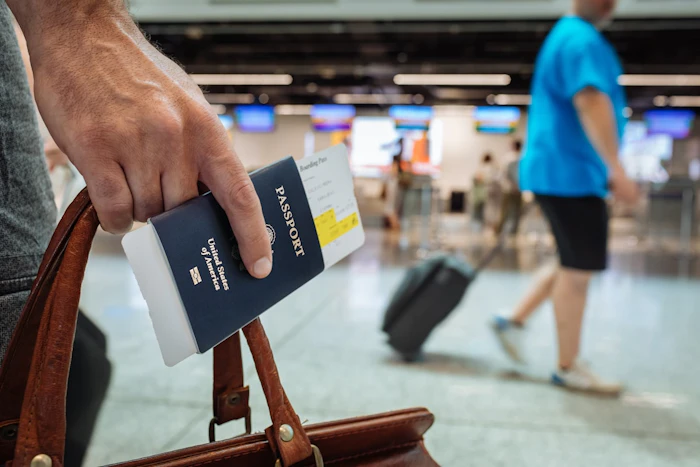
Search results on this topic contradict each other, with some pages claiming every visitor must register their identity to use any mobile data in Taiwan. That is not what the carriers themselves say. Here is what can be verified from primary sources, and what cannot.
What the carriers actually require
If you buy a prepaid SIM from a Taiwanese carrier, you must identify yourself. Taiwan Mobile's official FAQ states that a foreign buyer needs primary identification — a passport — plus secondary identification, listing options including a residence permit, work permit, visa, entry or exit permit, national health insurance card, international driver's license, or travel documentation issued by a foreign government. [Source: Taiwan Mobile official, accessed 2026-08]
Chunghwa Telecom's visitor prepaid service states the same requirement independently: passport plus a secondary ID, which may be an entry permit issued by Taiwan's National Immigration Agency, a visa, a tourist visa, an ARC, or an international student card. [Source: Chunghwa Telecom official, accessed 2026-08]
Two separate carriers, the same requirement. If your plan involves a local SIM or a local eSIM, bring two documents.
What this means for travel eSIMs
In practice, buying a travel eSIM from an international provider such as Airalo, Holafly, Saily, or Nomad does not involve submitting identity documents. You pay, you receive an activation profile, and you install it. That is an observable fact about how those checkouts work.
What cannot be stated with confidence is the legal mechanism behind that difference. A common explanation is that these plans reach Taiwan through international roaming arrangements rather than a direct customer contract with a Taiwanese carrier, which would place them outside the registration requirement. That explanation is plausible and widely repeated, but no primary source from Taiwan's National Communications Commission confirming it was found while researching this article, so it is presented here as an unverified explanation rather than a fact.
What is safe to plan around is narrower and more useful: requirements differ by provider, and you should check the individual product page before buying. Some marketplace listings that resell local carrier connections do require verification through a web form.
Trifa is a specific case worth knowing about because it connects directly to Chunghwa Telecom rather than roaming in. Verification does apply, and it is handled inside the app by photographing your passport, with no counter visit and no external website. [Source: Trifa press release, accessed 2026-08]
How to Buy, Install, and Activate Your Taiwan eSIM
The details vary slightly by provider, but the sequence is the same everywhere. Do the first three steps at home.
Confirm your phone is eSIM-capable and unlocked
On the Apple side, eSIM support starts at the iPhone XR and XS. Every iPhone 14 and later sold in the United States is eSIM-only with no SIM tray. [Source: Apple official, accessed 2026-08] On Android, support generally starts around the Google Pixel 3a, Samsung Galaxy S20, and equivalent models from other makers; check your specific model against the provider's compatibility list.
The second requirement catches people out more often than the first: your phone must be carrier-unlocked. A device still being paid off on a US, UK, or Australian carrier contract may be locked, and a locked phone will refuse the eSIM profile no matter how correctly you install it. Contact your carrier to confirm unlock status before you travel, not at the airport. Unlock conditions differ by carrier and were not verified for this article.
A quick way to check eSIM capability on either platform is to dial *#06#. If an EID number appears alongside the IMEI, the phone has an eSIM.
Buy the plan before you fly
Choose Taiwan on the provider's app or site, pick a plan using the sizing table above, and pay. Note the activation rule: most travel eSIMs start counting validity from the moment the eSIM connects to a network in Taiwan, not from the moment you buy. That means buying a week early costs you nothing.
Install over Wi-Fi at home
Installing the profile requires an internet connection, which is the circular problem people hit when they wait until arrival. Do it on your home or hotel Wi-Fi before departure.
Depending on the provider, you will either scan a QR code sent by email, tap an install button inside the app, or enter an activation code manually. On iOS 17.4 and later, app-based installs are usually a single tap with no QR code involved. Android generally uses QR or manual entry.
Switch over after you land
Once you are on the ground in Taiwan, set the travel line as your mobile data source. On an iPhone this is Settings, then Cellular, then Cellular Data, where you select the travel plan. Turn data roaming on for that line. Leave your home line active for calls and texts but with its data roaming off, so you are not billed twice.
Turn airplane mode off and the phone should register on the local network within a minute or two.
When you get home
Switch mobile data back to your home line. You can delete the used travel profile or leave it installed for a future trip. If you delete it, note that the same QR or activation code usually cannot be reused, so a reinstall means requesting a new one.
Why Travelers Choose Trifa for Taiwan
Across the six providers compared here, Trifa's case for a Taiwan trip rests on three specific things rather than price.
The first is the network. Trifa connects to Chunghwa Telecom, the operator with the largest subscriber base and revenue share in Taiwan, which is the safer choice if your itinerary leaves the western corridor for Taroko Gorge, Alishan, or Sun Moon Lake. [Source: Chunghwa Telecom official, accessed 2026-08]
The second is real-name verification. Taiwan is one of the few destinations where identity verification can add a step to getting online, and Trifa resolves it inside the app with a passport photo instead of a counter visit or an external web form. The company filed a patent application covering the automated verification flow in September 2025.
The third is the measured evidence. The speed data in this article came from Trifa's own connection in Taipei: a median of 245 Mbps across 10 locations, with nine of them above 80 Mbps and a peak of 950 Mbps at Shilin Night Market.
Beyond Taiwan, Trifa covers 200 countries, holds a 4.6 rating on the Japanese App Store across 13,329 reviews, and takes about three minutes from purchase to a working connection. Its in-app chat support is staffed 24 hours a day, 365 days a year; the agents are Japanese-speaking, so English-only travelers may want to use a translation tool when contacting them, but responses are quick. Current Taiwan plans and prices are shown in the app.
See Trifa's eSIM plans for Taiwan
Frequently Asked Questions
Which eSIM is best for Taiwan?
It depends on trip length. For three or four days, an unlimited plan at $12.50 from Airalo or Holafly removes any need to ration data. For one to two weeks of normal use, Saily's 10 GB for 30 days at $19.99 is better value. For trips heading into rural or mountainous areas, choose a provider on Chunghwa Telecom, the largest network — Trifa, Nomad, or a Klook or KKday listing.
Do I need an eSIM in Taiwan?
Not strictly. Free Wi-Fi exists at MRT stations, convenience stores, and cafes, and your home carrier's roaming will work. But public Wi-Fi is inconsistent and hotel Wi-Fi is often slow — measured at 32 Mbps in one hotel room against 790 Mbps on a cellular connection in the same room a minute apart. At roughly $4 to $12.50 for a short trip, an eSIM costs less than one day of most roaming passes.
Can you buy an eSIM at Taiwan's airports?
Yes. Taoyuan International Airport has telecom counters in arrivals selling prepaid SIM cards, and Chunghwa Telecom states it operates service centers at four major airports. Bring your passport plus a second form of ID, and New Taiwan dollars in cash for Chunghwa's counters. Buying a travel eSIM online before departure avoids the line entirely.
Can I use my US phone in Taiwan?
Yes, provided it is carrier-unlocked. Taiwan's networks use standard 4G LTE and 5G bands that US, UK, and Australian phones support. If your phone is an iPhone 14 or later bought in the US, it is eSIM-only, so a travel eSIM or a local eSIM is your only option — there is no SIM tray. Confirm your unlock status with your carrier before you travel.
Does Taiwan require real-name registration for tourists?
If you buy a prepaid SIM from a Taiwanese carrier, yes. Both Taiwan Mobile and Chunghwa Telecom require foreign buyers to present a passport plus a secondary document such as a visa, entry permit, or international driver's license. Travel eSIMs from international providers such as Airalo, Holafly, Saily, and Nomad do not ask for identity documents at checkout. Requirements vary by product, so check the listing before buying.
How fast is mobile data in Taiwan?
Fast. In March 2026, measurements at 10 locations around Taipei on a Chunghwa Telecom connection returned a median download speed of 245 Mbps and a mean of 327 Mbps, ranging from 12 Mbps on a moving MRT train inside a tunnel up to 950 Mbps at Shilin Night Market. Nine of the 10 readings exceeded 80 Mbps. These readings were all taken in Taipei and do not describe rural coverage.
Will my eSIM work in the Taipei MRT?
Yes, though this is the one environment where speeds drop noticeably. A reading taken on a moving train inside a tunnel returned 12 Mbps, against 260 to 280 Mbps at stationary underground locations such as Taipei Main Station and the Taipei 101 basement. Even 12 Mbps handles messaging, maps, and standard-definition video without trouble.
Can I share my eSIM data with a travel companion?
Usually, but check the terms rather than the headline. Saily and Nomad support hotspot sharing on their plans without a separate daily limit. Holafly allows sharing but caps it at 1 GB per day even on unlimited plans. For Trifa, hotspot availability depends on the specific plan and is shown in the app.
Get trifa and enjoy internet connectivity wherever you go
Only 3 minutes for setup!Get trifa App for FREE!
CHAT BOT
Ask for inquiries about use



Writer
trifa Editorial Team (Travel Prep & Local Info)
We provide easy-to-understand guides for beginners on travel preparation and local information, including the best season to visit, what to pack, and what to be aware of while traveling abroad. When needed, we interview Trifa’s local staff and organize the content based on on-the-ground conditions. We also verify time-sensitive information—such as seasons, regulations, and business hours—using primary sources from public agencies, transportation operators, and official facilities, and we update articles when changes occur (the “Last updated” date is shown in each article).
Search by Category
Popular Articles
POPULAR ARTICLES
01
 Overseas Internet
eSIM is recommended for international travel! Here are 7 advantages in a nutshell.
2024.01.07
02
%2520(1).jpg&w=3840&q=75) Overseas Internet
Overseas InternetWhat are the 6 ways to use a Japanese smartphone/cell phone overseas?
2024.02.06
03
%2520(1).jpg&w=3840&q=75) Overseas Travel Essentials
Overseas Travel EssentialsAre you ready for a trip to Korea? Checklist of things to bring and essentials
2024.02.07
Get trifa and enjoy internet connectivity wherever you go
Only 3 minutes for setup!Get trifa App for FREE!
CHAT BOT
Ask for inquiries about use